What GBTA 2026 Revealed About the New Value Equation for Business Travel

At GBTA Convention 2026 in Chicago, one idea surfaced repeatedly across conversations about the future of corporate travel - business travel is increasingly being judged by the business outcomes it enables, not simply by the activity it generates. That represents a fundamental shift in how companies should think about travel.
The question is moving from "How much did we spend on travel?” to "What did that travel help the business achieve?"
And the distinction matters because business travel remains a significant investment.
Business Travel Is Growing. So Is the Pressure to Prove Its Value.
The latest GBTA Business Travel Index forecasts global business travel spending to reach $1.71 trillion in 2026, alongside approximately 1.84 billion business trips worldwide. But the report also points to higher prices, geopolitical uncertainty, and transportation pressures shaping the outlook.
In other words, companies are spending more in an environment where every dollar is facing greater scrutiny. That makes the traditional approach to travel ROI increasingly inadequate.
A company may know that it spent $5 million on business travel. It may know that 20,000 trips were taken. But those numbers alone don't answer the questions leadership increasingly wants answered:
- Which trips created the most value?
- Which travel supported revenue generation?
- Which trips accelerated critical projects?
- Where is travel investment actually contributing to business growth?
That is where the new value equation begins.
The Business Case for Travel Is Becoming More Strategic
Recent research reinforces the idea that business travel should not be evaluated purely as an expense.
A 2025 GBTA and ASTA study analyzing more than 3,200 U.S. companies found that organizations with more strategic approaches to business travel management could achieve up to 30% higher revenue than their peers. The research estimated that optimizing business-travel investment could unlock significant additional sales across U.S. companies.
The important takeaway isn't that every additional dollar spent on travel automatically creates revenue. It is that how an organization manages and directs its travel investment can influence business performance.
That changes the conversation. Travel is no longer simply something to control; it is something to allocate strategically.
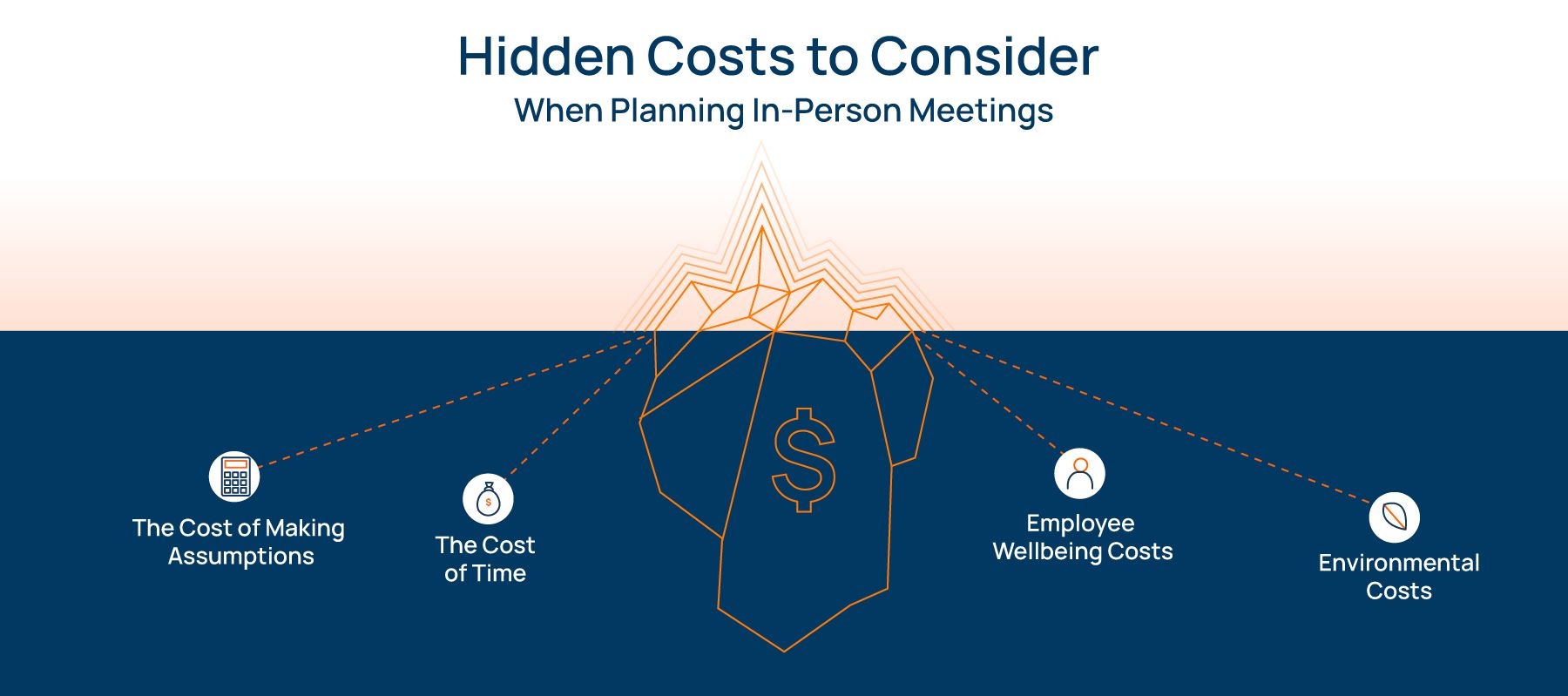
The Cost of a Trip Is Easy to See. Its Value Is Not.
Consider a typical business trip. A company can usually tell you what the flight cost, what the hotel cost, how much was spent on meals and ground transportation, whether the booking followed policy, or whether the traveler used a preferred supplier.
But can it tell you what business objective the trip supported, whether the meeting accelerated a deal, whether it strengthened a customer relationship, whether it shortened a project timeline, whether it supported a successful hire, whether it eliminated the need for multiple virtual meetings, or whether the employee was productive throughout the journey?
These are harder questions. And increasingly, they are the questions that matter. The problem is that the data required to answer them rarely lives in one place.
The New Travel Value Equation
This points toward a different way of thinking about travel ROI.
Instead of Travel Spend → Cost Savings, the equation becomes: Purpose → Experience → Spend → Outcome
Each part plays a role.
Purpose: Why Are We Traveling?
Not all trips are created equal. A sales meeting, customer renewal, project implementation, recruitment interview, conference, site visit, and team gathering each have different objectives.
Understanding the purpose of travel is the first step toward measuring its value. Because you cannot evaluate the outcome of a trip if you don't know what it was intended to accomplish.
Experience: Did the Journey Enable the Outcome?
The cheapest itinerary isn't automatically the most valuable. A poorly timed connection, excessive travel time, inconvenient hotel location, or avoidable disruption can reduce the effectiveness of a trip before the meeting even begins.
Traveler experience therefore, isn't just an employee-satisfaction metric. It can be an input into business performance. The goal isn't to provide unlimited flexibility. It is to create an experience that helps employees achieve the reason they are traveling in the first place.
Spend: Was the Investment Proportionate to the Purpose?
Cost discipline isn't going away. But optimizing travel cannot mean choosing the cheapest option in isolation.
A small saving can quickly disappear if a cheaper itinerary adds hours of travel, causes a missed meeting, creates another overnight stay, or forces another trip.
The objective should be value-efficient travel, not simply low-cost travel.
Outcome: What Changed Because the Trip Happened?
This is the hardest and potentially most valuable part of the equation. The outcome could be revenue generated, a customer retained, a deal accelerated, a project launched, a critical hire made, a partnership strengthened, knowledge transferred, or a strategic decision reached.
The metric will vary by organization. But the principle remains consistent - travel should ultimately be connected to the business objective it supports.
The Missing Link Is Often Integration
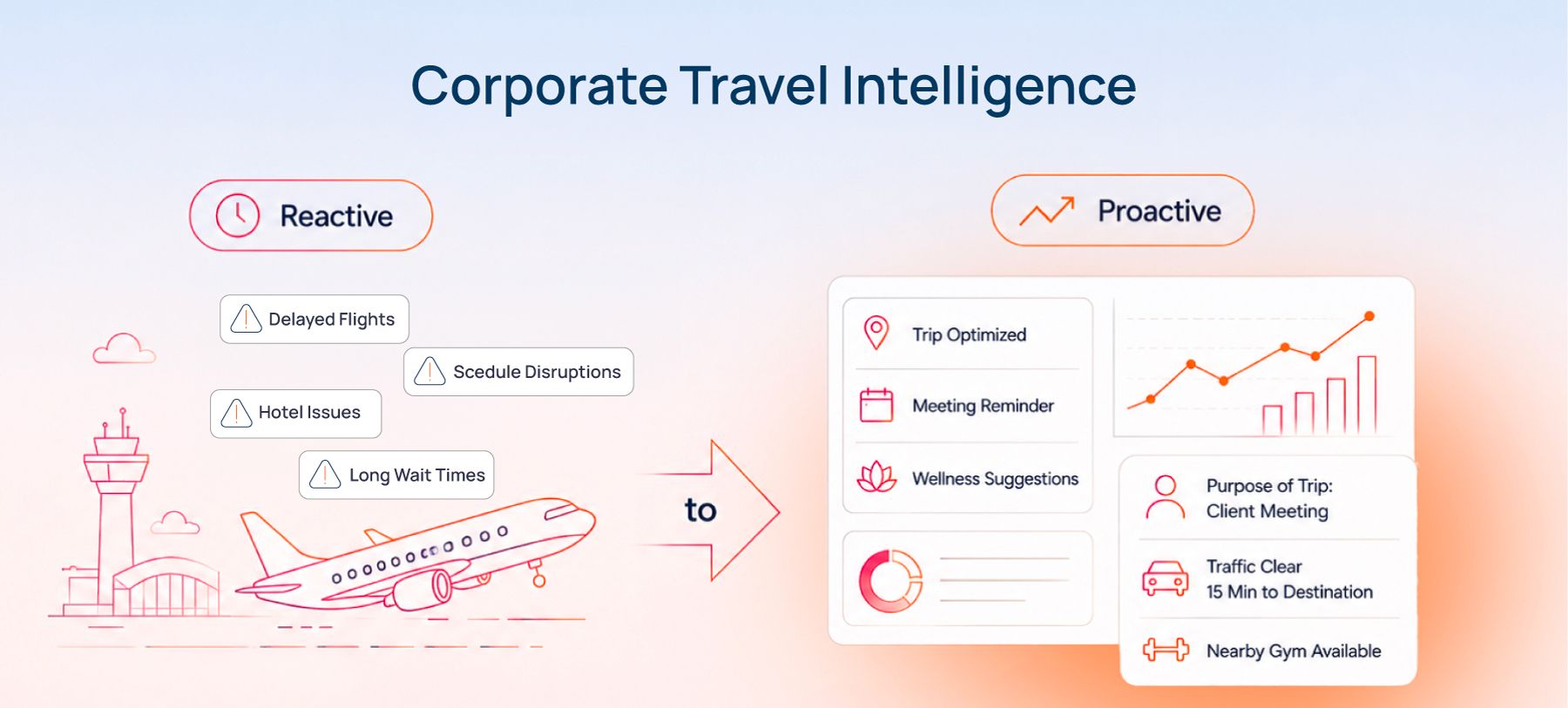
Why is this so difficult? Because the information needed to understand travel value is fragmented. Booking systems know where people traveled. Expense systems know what they spent. Corporate cards know what was charged. CRM systems know which customers and opportunities exist. HR systems know about employees and talent activity. Project systems know whether initiatives are progressing. Finance systems know the broader financial picture.
Individually, these systems provide useful information. Connected, they could provide something far more valuable - context. Without that context, travel programs are forced to rely on proxy metrics such as cost per trip, average ticket price, advance purchase, policy compliance, and supplier utilization.
These metrics are important, but they answer, "How efficiently did we execute travel?"
They don't necessarily answer, "How much value did the travel create?"
That is the gap the next generation of corporate travel technology needs to address.
From Travel Management to Travel Strategy
This shift also changes the role of the travel function. Travel teams have traditionally been responsible for controlling costs, negotiating suppliers, enforcing policy, supporting travelers, and managing risk.
Those responsibilities remain essential. But the opportunity is to connect them to broader business objectives.
Imagine being able to understand:
- Which types of trips produce the strongest business outcomes?
- Which markets justify greater travel investment?
- Which trips can be consolidated without affecting business performance?
- Which travel patterns are creating unnecessary cost or friction?
- Where does better traveler experience improve productivity?
- Which travel investments are supporting revenue, customer relationships, or strategic growth?
These are not simply travel-management questions. They are business questions.
The Role of Technology Is to Connect the Equation
This is where technology needs to mature alongside the business conversation.
One of the clearest messages from GBTA 2026 was that innovation shouldn't mean adding more technology for its own sake. It should reduce complexity, improve decisions, and strengthen outcomes.
The panel discussion framed the value chain as:
Travel Demand → Traveler Experience → Policy & Controls → Payments & Data → Business Outcomes
That framework is important because it shows that business value doesn't come from any one component. It comes from connecting them.
AI can identify patterns. Data can reveal spending. Booking technology can facilitate travel. Payment systems can provide visibility. Expense systems can capture what happened after the trip.
But the real opportunity comes when these capabilities work together to answer a much more important question, "What should the organization do next?"
That is where technology moves from automation to decision support.
AI Doesn't Create Value Just Because It Exists
The same principle applies to AI.
The corporate travel industry is understandably excited about AI, but GBTA conversations highlighted an important warning - AI only matters when it solves a real problem.
Industry practitioners cautioned against 'AI theater' - technology that looks innovative but doesn't meaningfully reduce complexity or create measurable value.
The better question isn't, "Where can we add AI?" It is, "Which travel decision could we make better with AI?"
- Could it help identify unnecessary spend?
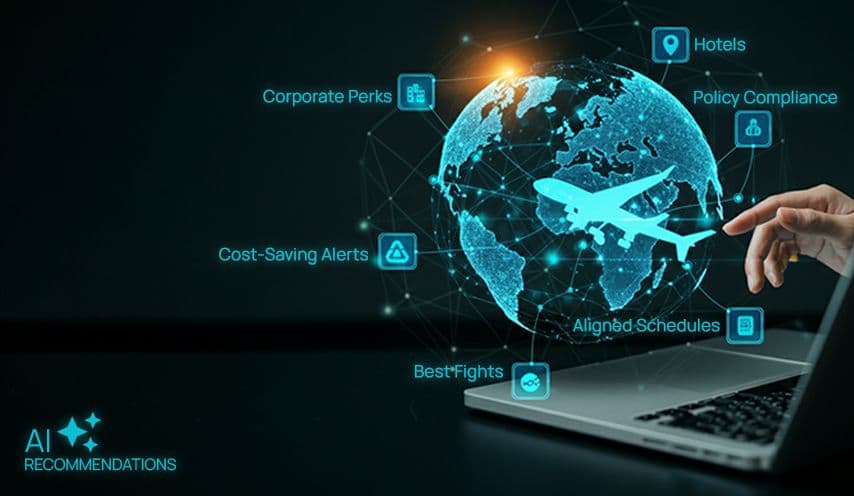
- Could it recommend a better itinerary based on business priorities rather than price alone?
- Could it identify patterns across travel and payment data?
- Could it help predict demand?
- Could it connect travel activity with business objectives?
Those are much more meaningful applications.
The Future Isn't Fewer Trips. It's Better Trips.
There is a temptation to frame the future of business travel as a choice between physical and virtual meetings.
That is the wrong debate.
The better question is - Which interactions create more value in person and which don't require travel at all?
Technology has already made it possible to eliminate some unnecessary travel. That's not a threat to business travel. It can make the trips that remain more intentional, focused, and valuable.
The future of business travel isn't about maximizing the number of trips. Nor is it about minimizing them at all costs. It is about maximizing the value created by the trips worth taking.
A New Definition of Travel ROI
Perhaps the biggest change is that travel ROI should no longer be viewed as a single number. It is a chain of value:
- The right trip
- For the right reason
- With the right experience
- At the right cost
- Creating the right outcome
That is a much more meaningful definition of travel efficiency than simply finding a cheaper flight. And it points toward the next evolution of corporate travel.
The travel program of the future won't just tell organizations where their people went and what they spent. It will help them understand why they traveled, what happened because they traveled, and where they should invest next.
That is when business travel stops being viewed simply as an expense to manage - and becomes a strategic capability to measure, optimize, and grow. The next evolution of corporate travel isn't about managing more trips. It's about understanding the value of every trip.

Disha Chatterjee
Senior Content MarketerIn this article
1.Business Travel Is Growing. So Is the Pressure to Prove Its Value.
2.The Business Case for Travel Is Becoming More Strategic
3.The Cost of a Trip Is Easy to See. Its Value Is Not.
4.The New Travel Value Equation
5.The Missing Link Is Often Integration
6.From Travel Management to Travel Strategy
7.The Role of Technology Is to Connect the Equation
8.AI Doesn't Create Value Just Because It Exists
9.The Future Isn't Fewer Trips. It's Better Trips.
10.A New Definition of Travel ROI

Related Blogs