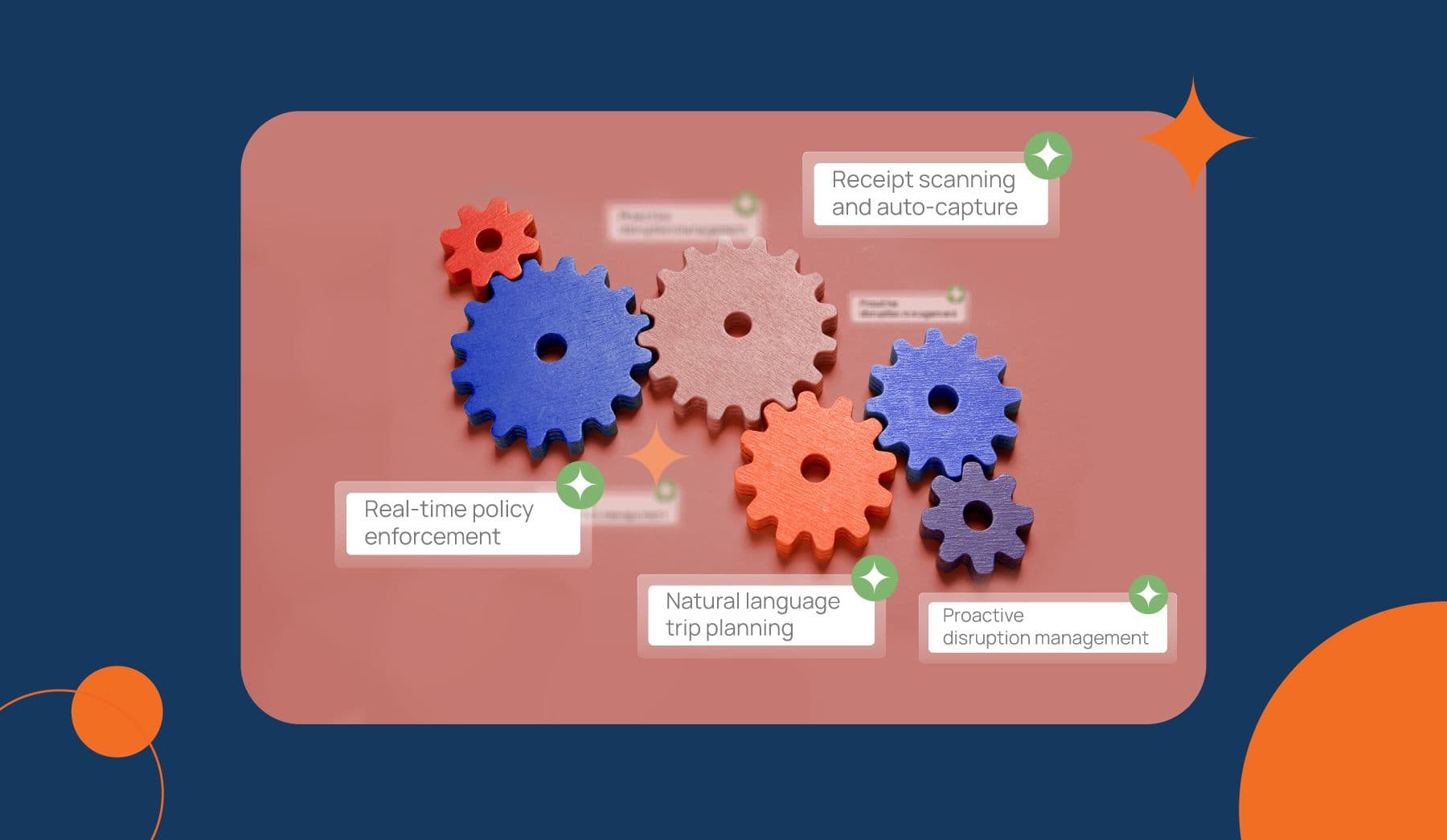
The Elephant in the Server Room: Is Your Travel AI Actually Secure?
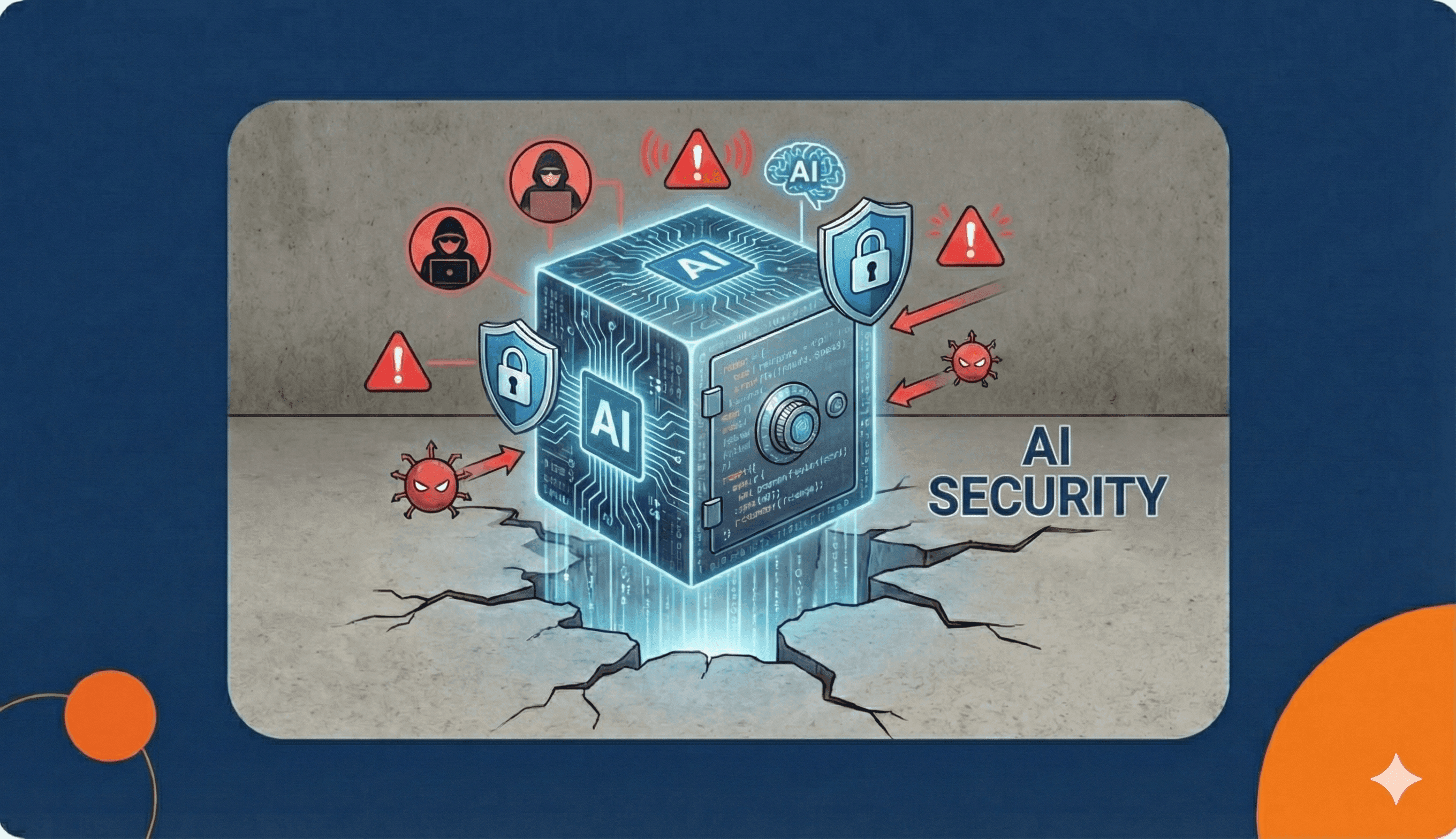
Let’s be honest for a second.
We all love the idea of AI. We love the idea of whispering, "Get me to San Diego for under ₹20k," and having a bot magically produce a perfectly compliant itinerary. It feels like living in the future.
But for those of us responsible for enterprise software - the CIOs, the HR and Admin Team; the second thought that follows the "wow" factor is usually a cold sweat. You start wondering: Where is that data going? Is ChatGPT reading my CFO’s flight details? Did I just accidentally leak our entire org chart to a server farm in Oregon?
It’s a valid fear. In the rush to adopt AI, security often feels like the buzzkill at the party.
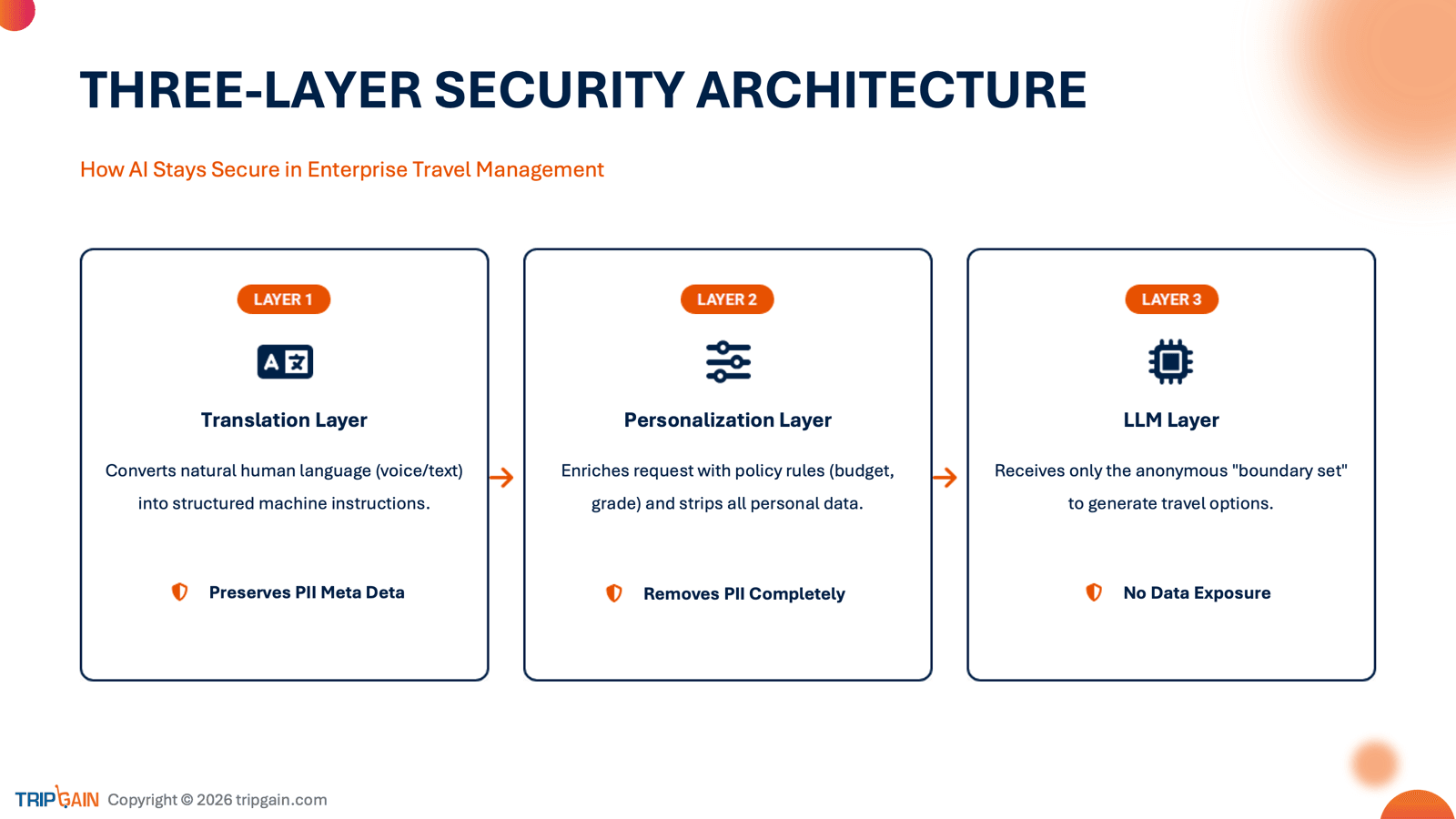
At TripGain, we didn’t want to be the buzzkill, but we also didn't want to be the reason you failed a travel compliance audit. So, we didn’t just bolt AI onto our platform; we built a fortress around it. We call it our Three-Layer Architecture.
It sounds technical (and it is), but the concept is actually pretty simple. Think of it as a high-tech game of "Telephone," but one where we strictly forbid the AI from knowing your secrets.
Here is how we keep your travel smart and secure.
Layer 1: The Translation Layer (aka "The Babel Fish")
The journey starts with you. Or rather, your employee, let's call him "Dave."
Dave types: "I need to go to a conference in Mumbai next Tuesday."
Now, AI models are great at understanding Dave’s casual typing, but enterprise databases? Not so much. They need structure.
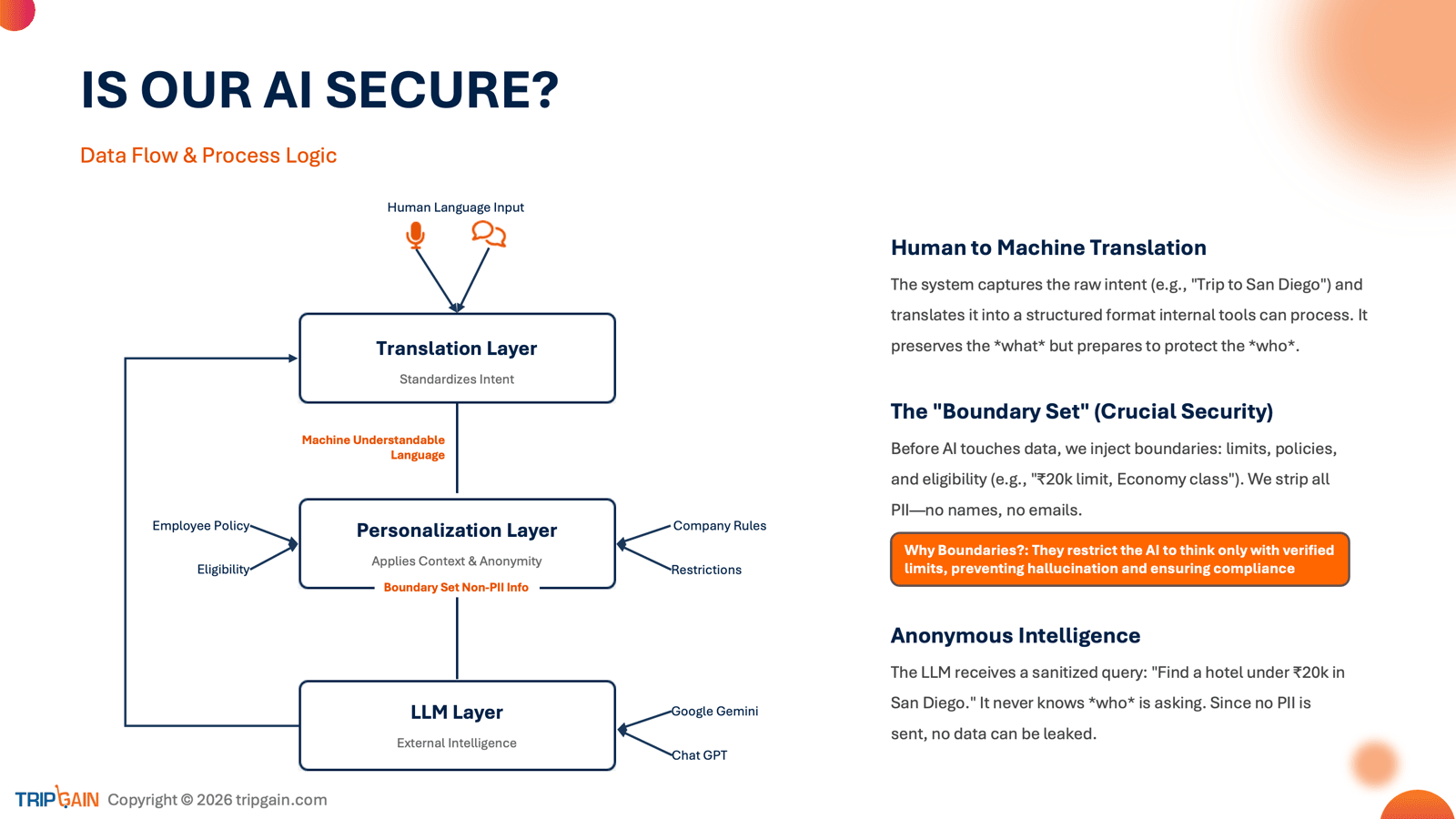
The Translation Layer is the bridge. It takes Dave’s human intent ("I need a flight") and translates it into a structured dialect our internal tools understand. It captures the what (direct flight), the when (Tuesday), and the where (Mumbai).
Crucially, this layer acts like a bouncer at a club. It checks Dave’s ID to make sure he works here, but then it puts a sticky note on his forehead that says "PII DETECTED." It flags all the personal stuff - name, email, employee ID; so we know exactly what not to send to the AI later.
Layer 2: The Personalization Layer (The " firewall with a brain")
This is where the magic (and the heavy lifting) happens.
If we just sent Dave’s request straight to a public Large Language Model (LLM), we’d be in trouble. The LLM might hallucinate. It might suggest a ₹50,000 suite at the Taj when Dave is only authorized for a standard room at the Ibis. Or worse, it might remember Dave's name.
The Personalization Layer intervenes. It looks up the company policy locally - safely inside TripGain’s secure environment - and creates a set of boundaries.
It says:
- Okay, user is Grade B.
- Budget cap: ₹15,000.
- Class: Economy only.
Then, it does something clever. It creates what we call a "Boundary-Set Non-PII Package." (Marketing wanted to call it the "Ghost Protocol," but Engineering said no).
Basically, we strip away Dave. The prompt that leaves this layer doesn't say "Dave from Accounting." It says: “Find a flight for [Anonymous User] consistent with [Policy Rule Set A].”
We aren't asking the AI to think creatively; we are asking it to think precisely within a box we built.
Layer 3: The LLM Layer (The Brain in the Box)
Finally, the request hits the LLM (whether it's Gemini, GPT, or an SLM).
Here is the kicker: The AI has no idea who you are.
The LLM receives a sanitized, anonymized request with hard constraints. It crunches the numbers, scans the flights, and returns the best options that fit the budget. It can't leak your data because it never saw your data. It can’t hallucinate a First Class upgrade because the boundaries we sent literally forbid it from looking at First Class seats.
It sends the results back up the chain, we re-attach the context (so Dave knows the results are for him), and voilà - a booked trip, fully compliant, zero data leakage.
Why This Matters (Beyond Just "Safety")
Look, we know "architecture" isn't the sexiest topic. But in the world of B2B SaaS, this three-layer approach is a game-changer for three reasons:
- No "Hallucinations": Hallucinations are fun at a Pink Floyd laser show. They are not fun when an AI books a hotel that doesn't exist. Our boundary layer stops this cold.
- Auditability: Compliance officers love us. We can show exactly what data went where, when it was anonymized, and how the decision was made.
- Future-Proofing: Because our security is in the architecture, not the model, we can swap out the AI engine whenever a smarter, faster one comes along. We aren't married to one model; we're married to your data security.
The Bottom Line
You shouldn't have to choose between innovation and privacy. You can have the cool, conversational AI interface and sleep soundly knowing your org chart isn't floating around the public web.
The answer to "Is your AI secure?" isn't a vague "yes." It's a three-layer architected guarantee.
Ready to see it in action? Contact Us at TripGain and let’s get your team moving securely.

Godi Yeshaswi
Senior Product MarketerIn this article
1.Layer 1: The Translation Layer (aka "The Babel Fish")
2.Layer 2: The Personalization Layer (The " firewall with a brain")
3.Layer 3: The LLM Layer (The Brain in the Box)

Related Blogs