The Controller’s Irony: Why Finance Values Inventory More Than Your Travelers Do
In the rapidly evolving landscape of Indian corporate travel, a fundamental disconnect has emerged between the back office and the road. While travelers often prioritize convenience and speed, Finance and HR leaders are focusing on a different strategic lever - Inventory Access.
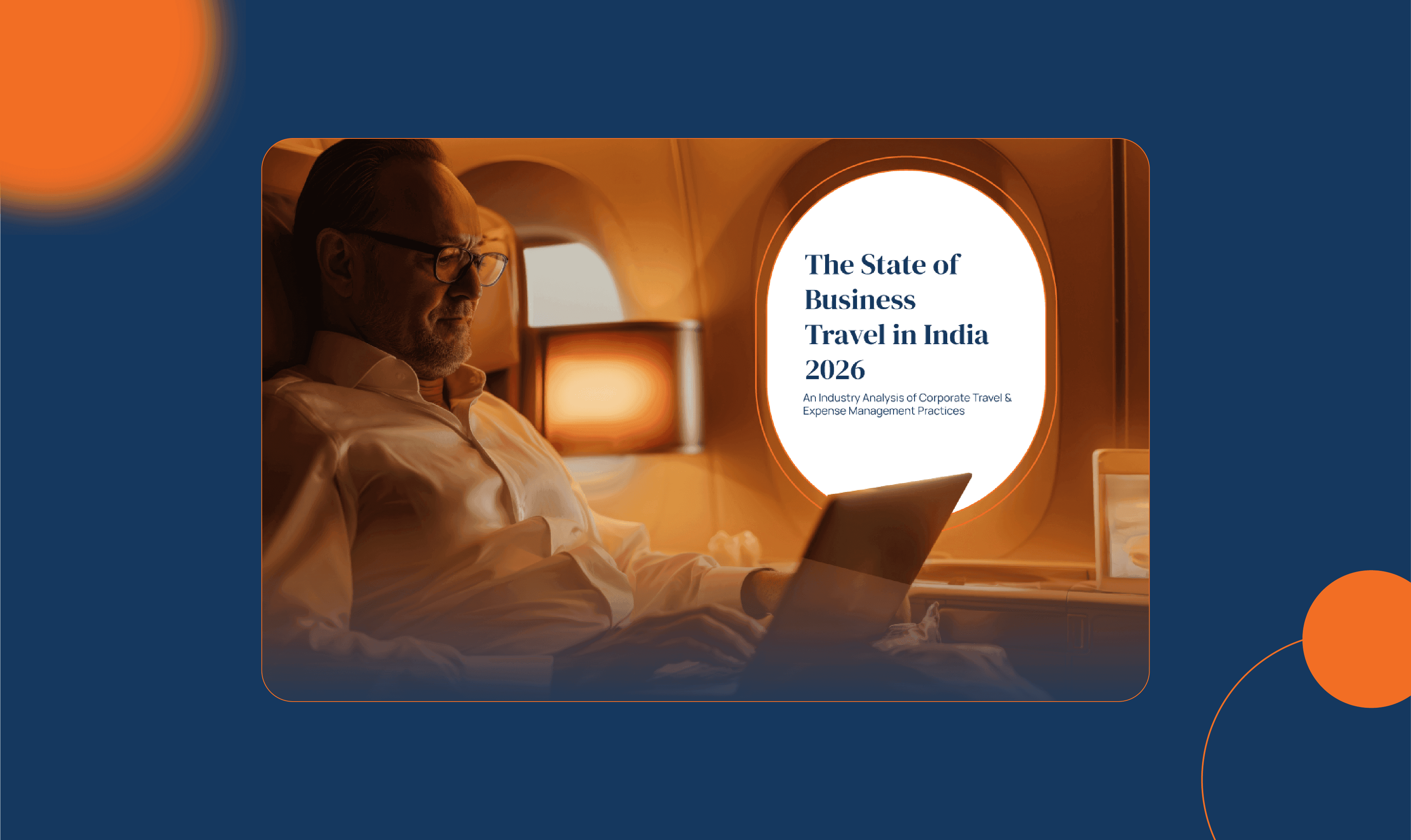
According to our newly published State of Business Travel 2026 report by TripGain, an industry-wide analysis of over 200 stakeholders across India, this gap isn't just a difference in preference. It is a strategic misalignment that directly impacts the bottom line and operational scalability.
The Data: A Tale of Two Priorities
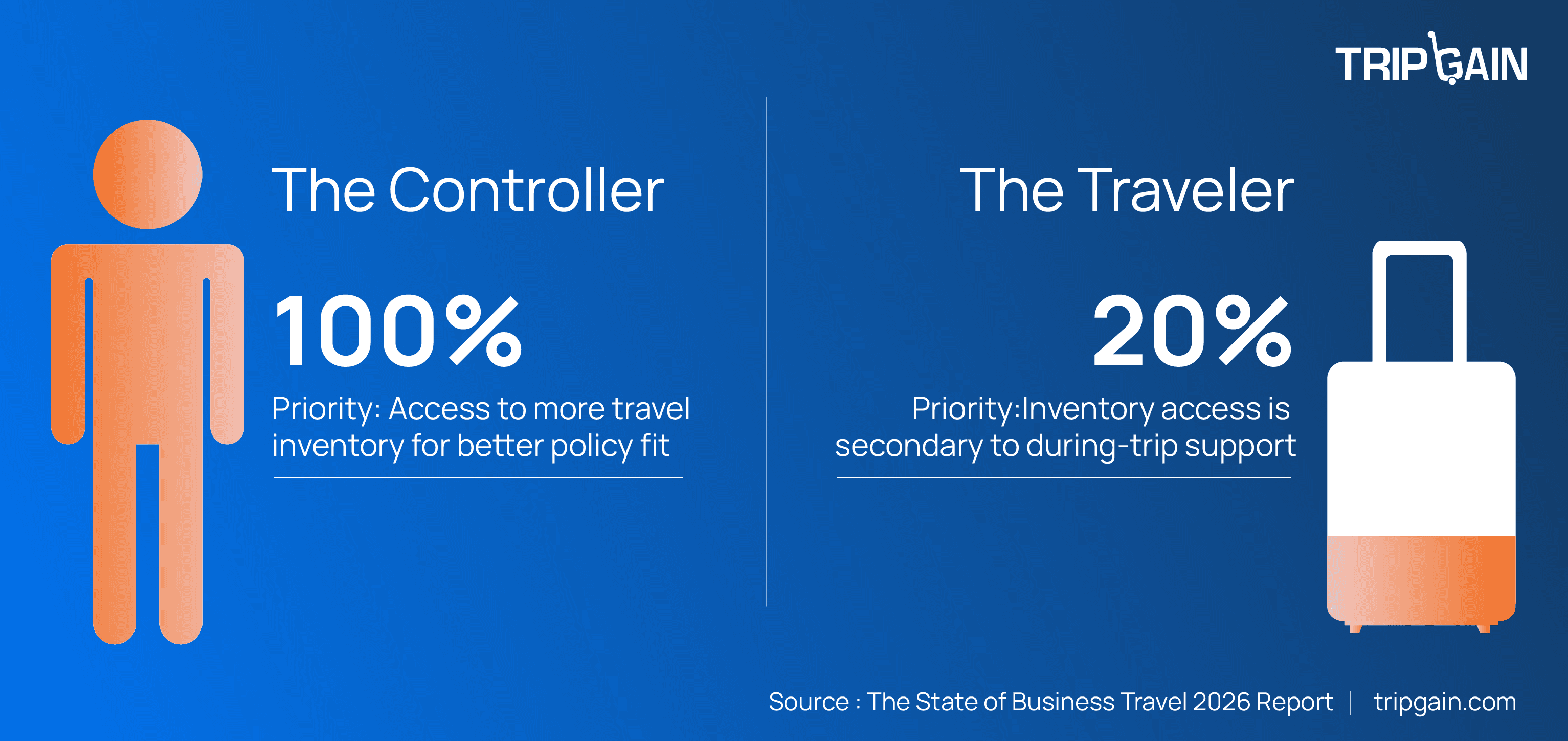
The research conducted between November 2025 and January 2026 uncovered a striking ‘Controller’s Irony’ regarding what defines a successful travel program. 100% of HR and Finance Controllers identified ‘Access to more travel inventory’ as their top strategic goal. Meanwhile, only 20% of Business Travelers shared this priority. To the traveler, more inventory might seem like ‘more noise’ during a search. To a Controller, however, inventory is the foundation of Policy Fit, Cost Control, and Negotiated Value.
Why Finance is Obsessed with Inventory
The report suggests that Finance teams value broader inventory because it directly influences three critical areas of corporate governance:
1. Cost Control through Choice
When a travel system limits options, travelers often find that ‘compliant’ choices are either unavailable or logistically unsuitable. This leads to ‘leakage’, where employees book outside the system to find better deals or more convenient flights. A wider inventory ensures that the best market rates are captured within the governed platform.
2. Negotiated Value and Policy Compliance
A wider selection allows organizations to better leverage preferred vendor rates. If the inventory is restricted, the organization cannot ensure it is capturing the best possible price at the point of booking. Currently, 33.3% of organizations prioritize access to more inventory to drive better choices and flexibility.
3. Real-Time Visibility vs. The ‘Gray Area’
Currently, 46.9% of organizations operate in a hybrid booking environment - a mix of managed and self-booked trips. This fragmentation is often a result of poor internal inventory, forcing travelers to look elsewhere. For Finance, this is a nightmare - it means they only see the spend after it has occurred, rather than influencing the decision at the point of purchase.
The Hidden Cost of Manual Friction
The ‘Controller’s Irony’ is further complicated by the ‘Automation Efficiency Gap’. The report reveals that even when tools are in place, the downstream workflows remain sluggish:
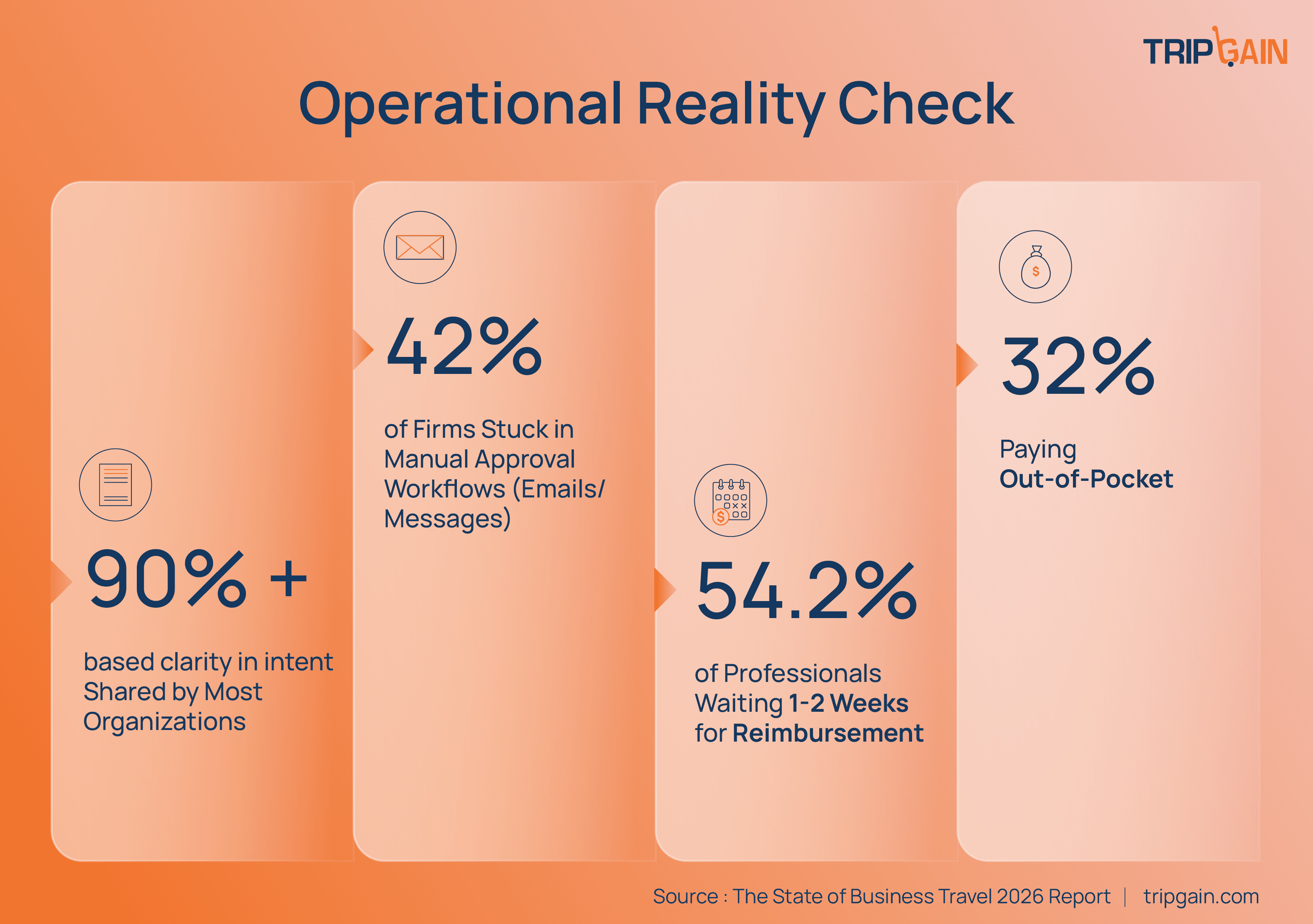
The Approval Bottleneck: While policies are defined, 42% of organizations still rely on manual approval workflows (emails and messages), making compliance dependent on individual availability.
The Reimbursement Lag: A staggering 54.2% of professionals wait between 1 to 2 weeks for reimbursement.
The Out-of-Pocket Burden: Despite the rise of fintech, 32% of employees are still forced to pay for business travel upfront and claim it back later. For Finance, this manual friction means that 60% of travel budgets are controlled centrally, but actual spending decisions are dispersed across departments with limited real-time oversight.
Automation: The Bridge to Strategic Spending
One of the most significant findings in the State of Business Travel 2026 report is the link between automation and discretionary spending confidence. Organizations using automated booking platforms report a 64% likelihood of approving premium travel options (upgrades or flexible fares) when justified. In contrast, firms relying on manual or assisted tech are only 14.3% likely to do the same.
The Insight: Automation is not just about cutting costs. When core controls are strong and visibility is high, leadership feels more comfortable approving justified premium spend because they trust the system's integrity.
Moving Toward Connected Workflows
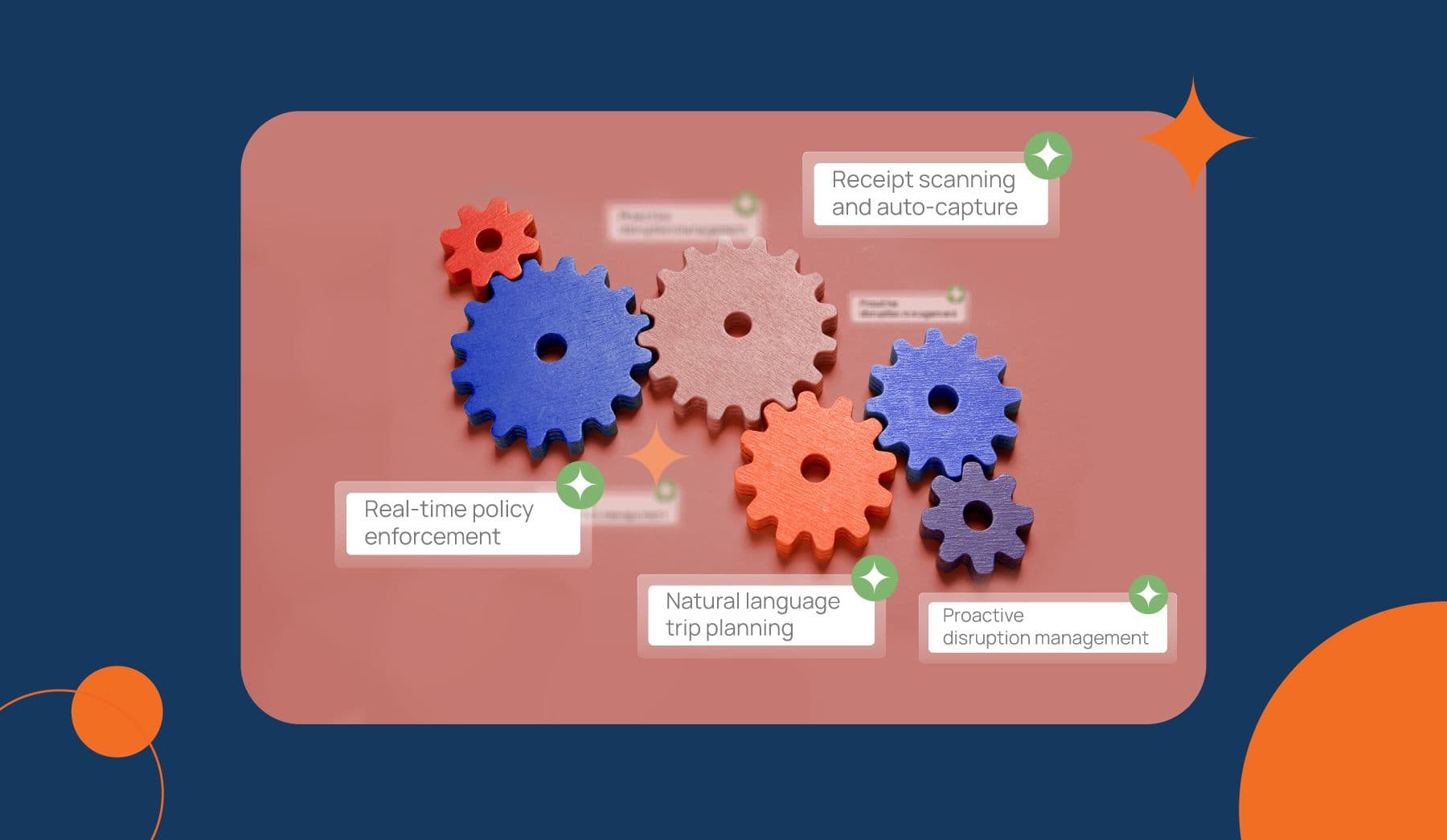
The report concludes that the industry is in a phase of ‘operational transition’. To resolve the Controller’s Irony, organizations must move away from function-wise management - where HR, Finance, and IT solve for their own silos and toward connected workflows. HR must move from manual coordination to system-driven policy enforcement. Finance must shift from reactive post-trip reviews to proactive, point-of-booking visibility. IT must prioritize the integration of travel tools with core enterprise systems to reduce technology fragmentation.
Are You Paying a ‘Fragmentation Tax’ on Your Travel Spend?
The findings in the State of Business Travel 2026 provide a structured roadmap for organizations to move from administrative burden to strategic advantage. Rather than evaluating travel components in isolation, decision-makers must look at how booking, policy, payments, and expenses interact.
Download the Full 28-Page Industry Analysis
Benchmark your maturity against 200+ industry peers. Identify operational gaps in your approval and reimbursement cycles. Align your stakeholders across HR, Finance, and IT with data-driven insights.

Disha Chatterjee
Senior Content MarketerIn this article
1.The Data: A Tale of Two Priorities
2.Why Finance is Obsessed with Inventory
3.The Hidden Cost of Manual Friction
4.Automation: The Bridge to Strategic Spending
5.Moving Toward Connected Workflows
6.Are You Paying a ‘Fragmentation Tax’ on Your Travel Spend?

Related Blogs