Why MICE Demands a Different Approach in Corporate Travel

As global businesses expand, the importance of in-person interaction has made MICE travel more significant than ever. Meetings, conferences, exhibitions, and incentive trips play a vital role in corporate strategy - from internal alignment and training to client acquisition and brand positioning.
Today’s corporate travel planners and finance leaders must therefore think differently about MICE, not as isolated events, but as strategic investments that produce measurable business outcomes.
The Global Scale and Growth of MICE Travel
It’s not an exaggeration to call MICE a powerhouse within business travel. According to recent market research, the MICE market is projected to grow from roughly USD 1,226 billion in 2025 to over USD 2,449 billion by 2032, an impressive CAGR of over 10%. This expansion underscores how central event travel has become global corporate agendas.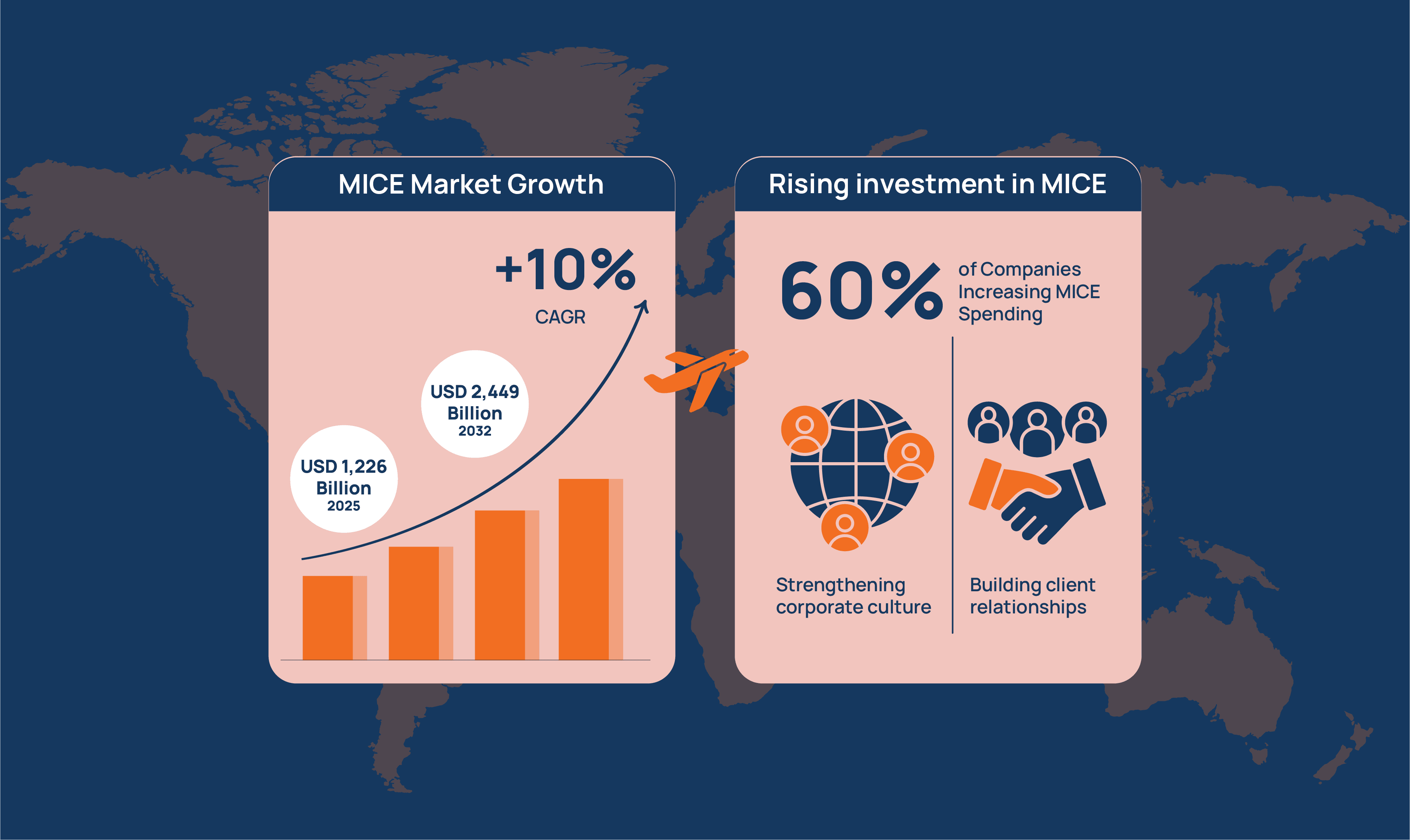
Moreover, another global industry report points out that more than 60% of businesses are increasing their investment in MICE activities, largely to strengthen corporate culture and client relationships.
This growth is not uniform. Regions like North America remain dominant due to strong convention infrastructure, while Asia-Pacific is emerging quickly as a MICE hub fueled by rapid economic expansion and rising corporate budgets.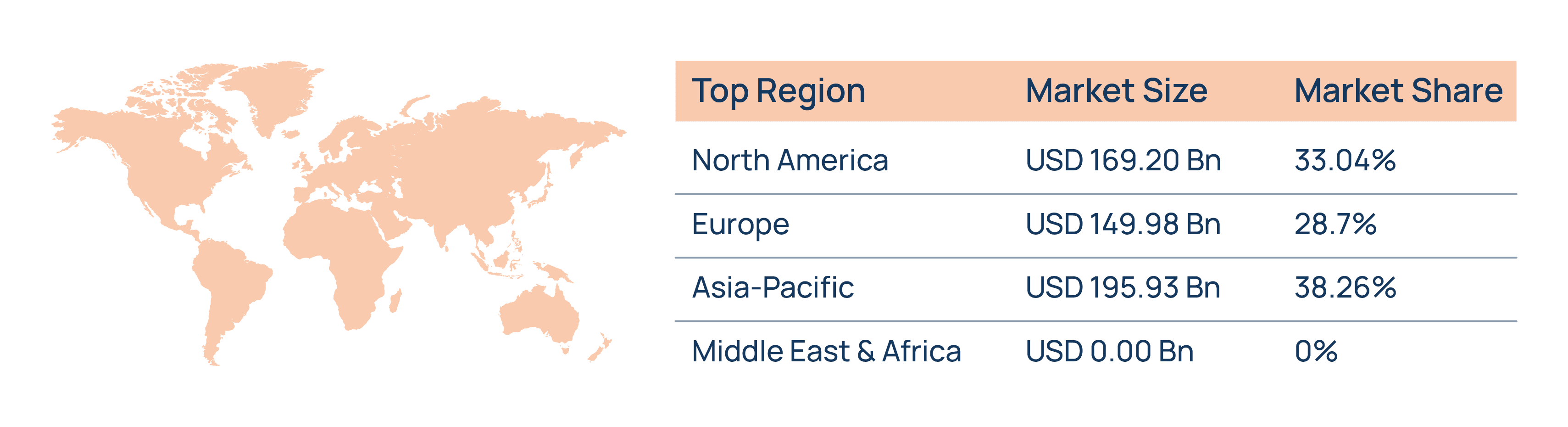
Why MICE Travel Is Not ‘Just Another Business Trip’
Contrary to typical individual corporate travel, MICE involve several layers of complexity:
Group Logistics and Scale Requirements
MICE travel encompasses large groups of travelers whose itineraries, accommodations, and ground logistics must be synchronized across time zones and event venues. This inherently increases the operational load and coordination needed compared to single-traveler bookings.
Multi-Stakeholder Coordination
Managing MICE requires collaboration among HR, finance, procurement, event managers and travel teams. Budgets are not simply allocated, they are approved against strategic goals for employee engagement, brand visibility, or sales partnerships.
Higher Spend and Risk Visibility
Corporate MICE events account for a significant portion of travel spend. In many markets, 28% or more of total business travel expenditure is tied to MICE activities, which means financial controls and audit readiness matter more than ever.
Key Trends That Are Reshaping MICE Travel Management
Understanding and adapting to macro trends helps decision-makers stay ahead. Here are the most significant ones shaping MICE today:
Hybrid & Tech-Enabled Events Are Mainstream
One of the most profound shifts is the rise in hybrid formats - blending virtual and in-person participation. Over 60% of MICE events now integrate hybrid solutions, enabling broader access and flexibility while managing cost and travel risk.
Technology also extends to the operational level - AI-powered attendee personalization, real-time scheduling apps, and cloud-based event platforms are increasingly used to enhance engagement and logistical efficiency.
Sustainability and ESG Influence Planning
Corporate travel policies increasingly prioritize sustainability. Around 75% of MICE travelers say sustainability is a key factor in planning and venue selection, which in turn affects hotel contracts, transportation choices, and vendor selection. This trend meshes with broader organizational ESG goals, where measurable environmental impact is part of brand and stakeholder responsibility.
Bleisure and Experience-Led Business Travel
The boundary between business and leisure is blurring. A growing share of delegates extend their stay to explore destinations, enhancing overall employee satisfaction and engagement, sometimes even influencing attendance rates.
Challenges That Demand a Strategic Approach
While the potential of MICE travel is substantial, so are the challenges:
Rising Cost and Budget Pressure
Economic uncertainty and travel costs place pressure on corporate budgets. Over 59% of organizations report budgetary constraints impacting MICE plans, requiring sharper forecasting and cost optimization.
Geopolitical and Operational Risk
Event planners frequently adjust schedules due to geopolitical instability, health regulations, or visa issues - factors outside traditional travel planner control. Around 47% of cancellations or delays are tied to such external factors.
Fragmented Tools and Data Silos
Many organizations still rely on manual coordination across email, spreadsheets, and multiple vendor systems. This fragmentation undermines visibility and slows down reporting, reconciliation, and compliance.
Strategic Imperatives for Corporate Travel Leaders
For CFOs, travel admins, and HR leaders looking to elevate the role of MICE travel, the following strategic priorities should be top of mind:
Centralize Booking & Expense Data
Bringing MICE travel into enterprise-wide travel and expense platforms offers a single source of truth - improving policy compliance, spend tracking, and forecasting.
Adopt Technology for End-to-End Visibility
Tools that integrate booking, attendee management, travel logistics, and spend analysis reduce manual work and signal financial control to auditors and stakeholders.
Embed Sustainability Metrics
Aligning MICE travel choices with ESG goals not only improves brand perception but also supports internal reporting and long-term value creation.
Connect Travel Strategy with Business Outcomes
Treat MICE not as an operational necessity but as a business driver by tracking metrics like engagement ROI, lead generation, knowledge transfer impact, and employee satisfaction.
Evolving the Mindset Around MICE Travel
The MICE segment is no longer peripheral. It accounts for a substantial portion of corporate travel spending and business impact. For modern enterprises, effective management of meetings, incentives, conferences and exhibitions requires strategic planning, integrated technology, and cross-functional orchestration.
Decision makers who reframe MICE travel as a strategic business lever, rather than a logistical overhead, will unlock greater organizational value, tighter financial controls, and stronger brand outcomes in an increasingly competitive global landscape.
FAQ
1. What is MICE travel in corporate business travel?
MICE travel refers to Meetings, Incentives, Conferences, and Exhibitions, covering group-based business travel planned around corporate events rather than individual trips.
2. How is MICE travel different from regular corporate travel?
Unlike individual business trips, MICE travel involves group coordination, fixed timelines, higher spend visibility, and multiple internal stakeholders, requiring a more structured approach.
3. Why is MICE travel important for enterprises?
MICE travel supports business growth, employee engagement, leadership alignment, and client relationships, making it a strategic investment rather than an operational expense.
4. What are the biggest challenges in managing MICE travel?
Key challenges include cost control, policy compliance, cross-team coordination, real-time visibility, and post-event expense reconciliation.
5. How can technology improve MICE travel management?
Modern travel and expense platforms enable centralized bookings, automated approvals, real-time spend tracking, and better compliance, simplifying MICE travel at scale.

Disha Chatterjee
Senior Content MarketerIn this article
1.The Global Scale and Growth of MICE Travel
2.Why MICE Travel Is Not ‘Just Another Business Trip’
3.Key Trends That Are Reshaping MICE Travel Management
4.Challenges That Demand a Strategic Approach
5.Strategic Imperatives for Corporate Travel Leaders
6.Evolving the Mindset Around MICE Travel
7.FAQ

Related Blogs