The Future of Corporate T&E Is a Hybrid Model, Not a Choice Between TMCs and Self-Booking
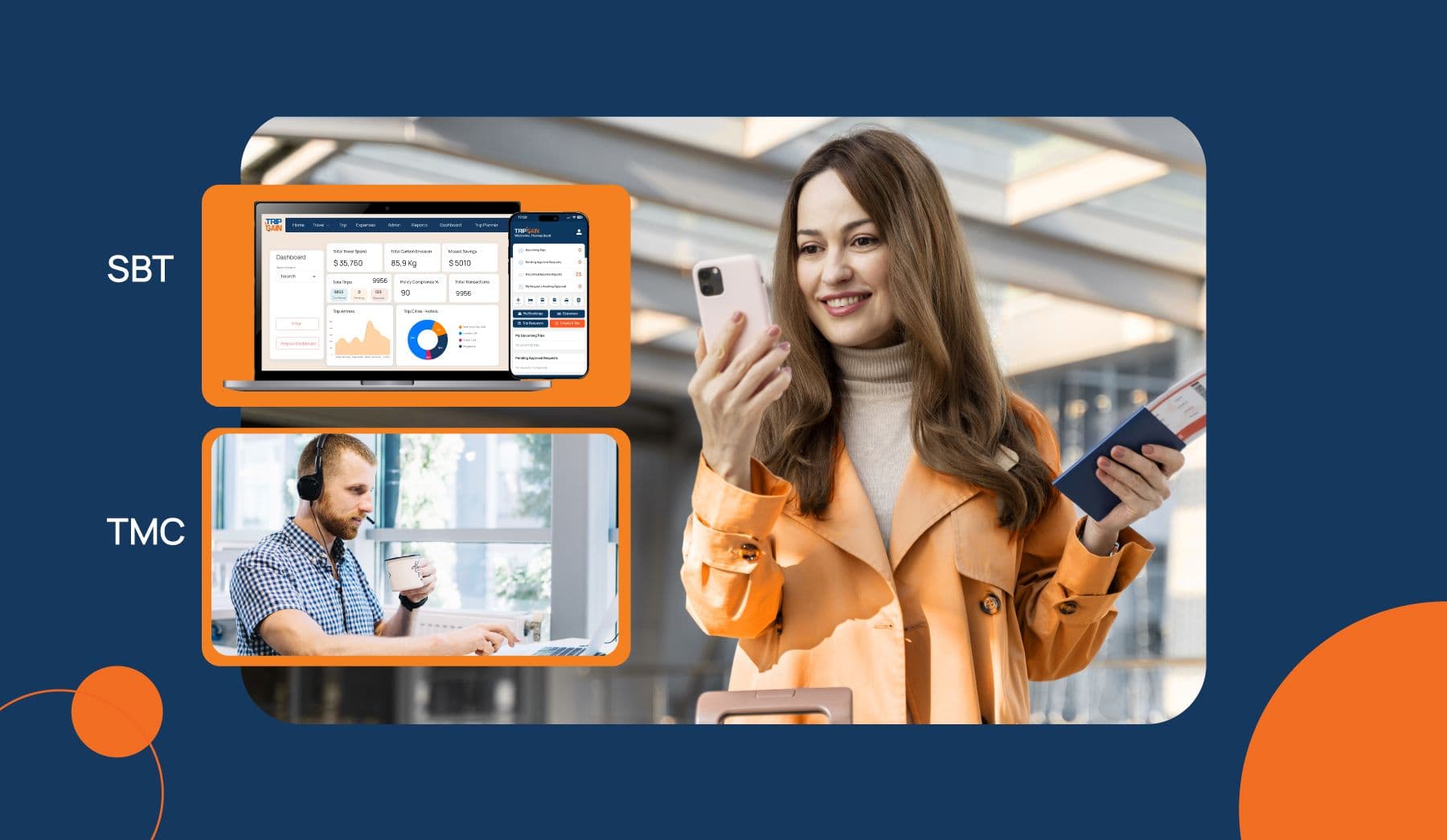
Corporate travel is booming again. According to the Global Business Travel Association, global business travel spending is projected to reach $1.57 trillion in 2025, with continued growth expected through the decade. This reflects not just recovery but expansion, as companies invest in travel to drive revenue and collaboration.
At the same time, traveler behavior and booking habits are evolving. Around 74% of business travelers took between one and five trips last year, while more than 80% say they are traveling as much or more than before 2019 (source), underscoring the sustained importance of business travel post-pandemic. 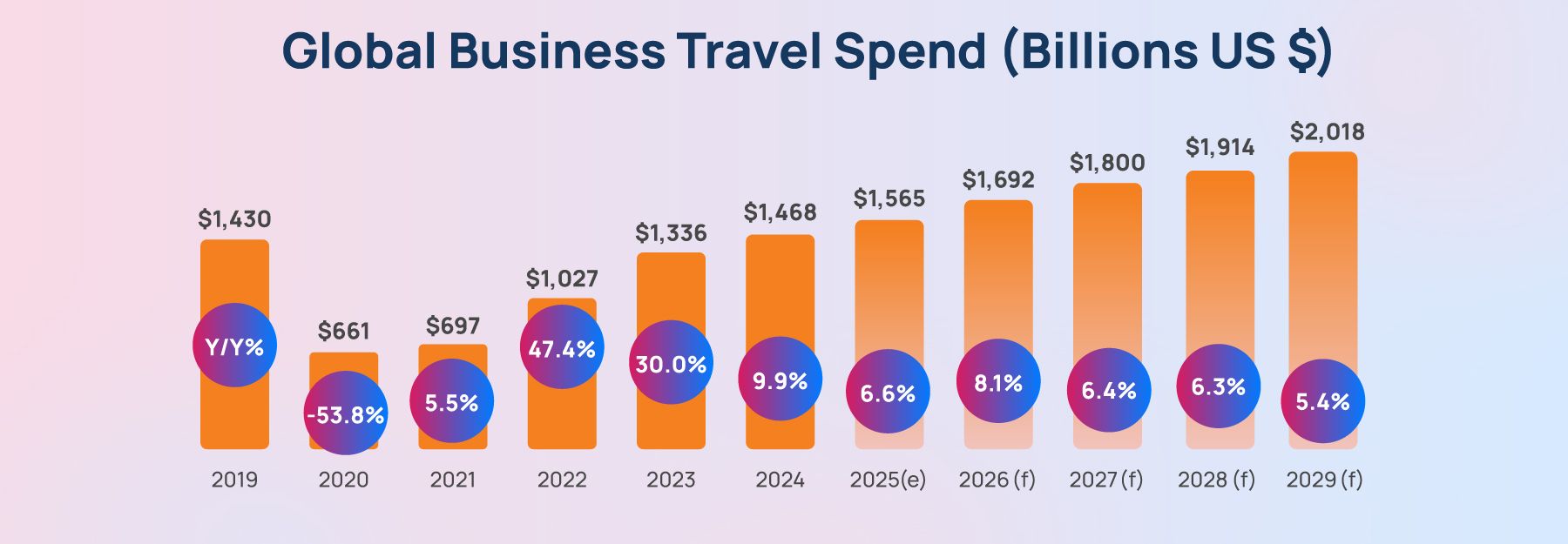
In this environment, a hybrid travel program that blends the strengths of Travel Management Companies (TMCs) and self-booking tools offers measurable advantages, especially in T&E workflows where visibility, compliance, and control are critical.
Centralize Visibility - The Foundation of Smarter T&E
One of the biggest challenges companies face is fragmented booking data. Fragmented travel data limits visibility, making spend reconciliation, policy enforcement, and risk management more complex.
Industry research highlights that:
- Only 56% of business travelers consistently use their company’s preferred corporate booking tool, limiting spend visibility and compliance enforcement (source)
- A significant proportion of trips continue to be planned and sometimes booked outside corporate channels, especially among certain workforce segments (source)
This fragmentation makes it harder to understand true spend and capture negotiated rates. A hybrid strategy ensures that bookings, whether made via self-service tools or routed through a TMC, feed into a centralized data layer, empowering teams with real-time insights across policy usage, supplier performance, and outliers.
Automate What You Can, Get Expert Support Where You Need
Not all travel requires the same level of support. Self-booking tools excel at routine, policy-compliant travel, delivering speed and convenience for employees. Meanwhile, TMCs provide strategic value for:
- Complex itineraries such as multi-city business visits
- Bookings involving higher spend or extended planning timelines
- Emergency support and disruption management
A hybrid model can automate routine trips through a booking tool while applying business rules that escalate to a TMC when specific conditions are met. This sensible distribution reduces workload pressure on support teams while ensuring human expertise is available for high-impact travel.
Embed Policy and Cost Controls at the Point of Booking
Cost control and compliance are top priorities for travel teams. Travel data shows that over half of travel managers place booking compliance above negotiating cheaper rates because compliance drives downstream T&E savings.
Embedding policy checks into the booking experience, whether via a corporate tool or through TMC systems, delivers:
- Pre-trip validation against company travel policy
- Automated nudges toward preferred suppliers
- Real-time alerts for out-of-policy selections
This not only improves compliance but also reduces post-trip corrections and expense disputes.
Close the Loop Between Travel, Billing, and Expense Management
Disconnected systems are a major inefficiency driver in T&E workflows. When booking, billing, and expense data live in silos, finance teams spend excessive time reconciling records and correcting inaccuracies.
A unified workflow ensures:
- Booking data flows seamlessly into expense platforms
- Invoices automatically match travel itineraries
- Travelers face fewer manual reimbursements and errors
This reduces processing time, boosts accuracy, and accelerates invoice lifecycle management, delivering a measurable operational impact.
Duty of Care: Protect People Through Complete Visibility
Duty of care is a non-negotiable responsibility for every travel program. When travel data is incomplete or delayed, organizations cannot effectively monitor traveler whereabouts or respond quickly during disruptions.
A consolidated travel data flow ensures:
- Faster identification of travelers in affected regions
- Improved crisis communication and support
- Enhanced traveler safety protocols
This is especially vital in global programs with significant cross-border movement.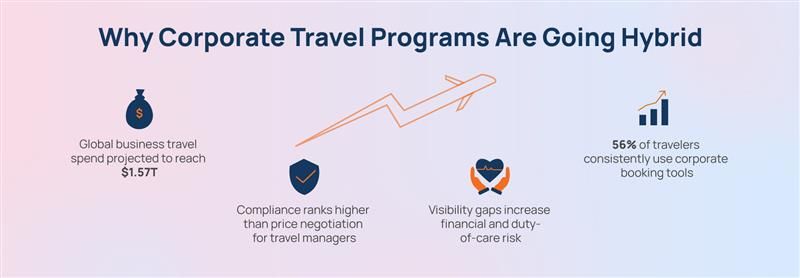
Tangible Outcomes from a Hybrid T&E Workflow
Why should travel and finance leaders pay attention to integrating TMCs and booking tools? The answer lies in measurable results:
- Stronger policy compliance and reduced leakage
- Higher negotiated rate capture due to centralized visibility
- Improved traveler adoption through intuitive self-serve tools
- Faster reconciliation and lower T&E processing costs
As business travel continues to expand and with corporate bookings still rebounding to pre-pandemic levels, closing these gaps not only improves operational efficiency but unlocks strategic value for the enterprise.
Final Thoughts
As corporate travel programs move toward hybrid models, the role of technology becomes less about replacing TMCs and more about enabling them to operate at scale. TripGain is designed to support TMCs that serve corporate clients by bringing together self-booking, policy control, and end-to-end T&E visibility in a single ecosystem.
By equipping TMCs with modern, enterprise-ready capabilities, TripGain helps them meet evolving corporate expectations. This makes it easier to win, retain, and grow larger corporate accounts while continuing to deliver the expertise and service that define their value.
FAQ
1. What is a hybrid business T&E workflow?
A hybrid business T&E workflow integrates TMC services with self-booking tools, combining automation for simple trips and expert support for complex travel.
2. Why use both a TMC and a self-booking tool?
Using both ensures traveler convenience without losing control over policy, cost, and duty of care.
3. How does a hybrid model improve travel policy compliance?
Policy rules are applied at the time of booking, reducing out-of-policy trips and post-trip corrections.
4. Does integrating TMCs and booking tools reduce costs?
Yes, centralized visibility helps capture negotiated rates, reduce leakage, and optimize travel spend.
5. How does a hybrid travel model support duty of care?
All bookings are captured in one system, enabling real-time traveler tracking and faster response during disruptions.

Disha Chatterjee
Senior Content MarketerIn this article
1.Centralized Visibility: The Foundation of Smarter T&E
2.Smarter Routing: Automate What You Can, Expert Support Where You Need It
3.Embedding Policy and Cost Controls at the Point of Booking
4.Closing the Loop Between Travel, Billing, and Expense Management
5.Duty of Care: Protecting People Through Complete Visibility
6.The Business Case: Tangible Outcomes from a Hybrid T&E Workflow
7.Final Thoughts
8.FAQ

Related Blogs