Corporate Travel Spend Management: 7 Ways Enterprises Can Control Costs Without Cutting Trips

Rising travel costs don't always mean your employees need to travel less. Here's how enterprises can improve corporate travel spend management, strengthen policy compliance, and make every business trip more accountable.
A flight gets booked. A hotel room is reserved. An employee visits a client, closes a deal, or works with a team in another country. Business moves forward.
Then the expenses arrive.
The airfare is higher than expected. The hotel exceeds the preferred rate. An approval is missing. Finance is chasing receipts, reconciling invoices, and trying to work out why the travel budget looks different from the forecast.
Sound familiar?
For global enterprises, managing corporate travel expenses is no longer just about finding cheaper flights or negotiating hotel rates. It involves understanding where money goes, why costs change, whether bookings comply with company policy, and how travel spending contributes to business outcomes.
The challenge is becoming more significant. According to the Global Business Travel Association's (GBTA) 2026 Business Travel Index, global business travel spending is forecast to reach $1.71 trillion in 2026, a 7.2% increase over the previous year. The number of business trips worldwide is projected to reach approximately 1.84 billion.
More spending doesn't necessarily mean more travel. Rising prices are playing a substantial role.
For enterprises, that creates an important question: how do you manage corporate travel spend without compromising the client relationships, employee experience, and business outcomes that make those trips worthwhile?
The answer begins with better visibility, stronger processes, and a more connected approach to corporate travel expense management.
1. Stop Looking at Travel Spend as Just Flights and Hotels
When finance teams review corporate travel expenses, the most obvious numbers tend to get the most attention: airfare, accommodation, ground transportation, and meals.
But these are only part of the picture.
Consider the full cost of a business trip. An employee books a flight outside the preferred booking channel. The manager approves it over email. The hotel invoice arrives weeks later. Finance manually matches the receipt against the expense claim, checks the policy, and reconciles the payment.
The final travel expense report might show the price of the ticket and hotel. It may not capture the time spent coordinating the booking, resolving exceptions, or correcting errors.
These indirect costs can accumulate across departments, entities, and countries.
Effective corporate travel spend management therefore requires looking beyond transaction values. Enterprises need to understand the operational costs associated with managing those transactions, too.
Start by mapping the complete travel lifecycle, from trip requests and approvals to bookings, expense submissions, reimbursements, and reconciliation. Identify where manual work occurs, where information gets lost, and where delays create additional costs.
The goal isn't simply to spend less on travel. It's to reduce the avoidable cost of managing it.
2. Build Visibility Before Trying to Reduce Costs
Here's a useful test for any finance leader: can you determine your organization's total travel spend for the previous month without asking multiple teams for spreadsheets?
Can you break that number down by department, legal entity, destination, project, supplier, and expense category?
If the answers require hours of data gathering, your organization may have a visibility problem.
Global enterprises frequently manage travel across multiple geographies, booking channels, payment methods, expense systems, and business units. When these operate independently, the resulting data can be difficult to consolidate.
Finance might have the expense records, procurement might hold supplier information, and travel administrators might manage booking reports. Each team sees part of the picture, but no single view tells the whole story.
A more effective approach to enterprise travel expense management brings these records together into a consistent reporting framework.
Useful metrics include:
- Travel spend versus budget: Which departments or entities are exceeding their allocations?
- Average trip cost: How does spending vary by destination, purpose, or business unit?
- Booking compliance: What proportion of reservations follow approved channels and company policy?
- Advance booking patterns: How frequently are employees booking close to departure?
- Expense processing time: How long does it take to review, approve, and reimburse claims?
- Supplier performance: Where can negotiated rates, preferred suppliers, or booking patterns be improved?
These metrics help finance and procurement teams identify the reasons behind spending patterns instead of reacting to the final numbers.
3. Make Travel Policy Compliance Part of the Booking Process
A travel policy is useful only when employees can follow it and the organization can enforce it consistently.
Many enterprises have detailed guidelines covering airfare classes, hotel limits, preferred suppliers, approval thresholds, and booking timelines. Yet employees may still book outside the approved process because the policy is difficult to navigate, the preferred option isn't readily available, or approval takes too long.
The financial consequences can extend beyond an individual booking. Repeated exceptions can weaken negotiated supplier agreements, make budgets harder to forecast, and create additional work for finance teams.
The latest Deloitte 2026 Corporate Travel Study highlights the importance of this issue. Among the 155 US-based travel managers surveyed, 60% identified booking compliance as a cost-control priority, while 44% reported making pre-trip approval processes more rigorous.
The practical lesson? Don't rely exclusively on employees remembering the rules.
A well-configured corporate travel management platform can apply company policies during the booking process, display eligible options, route exceptions for approval, and record decisions for later review.
This helps organizations shift from identifying policy violations after a trip to preventing avoidable exceptions before a booking is confirmed.
For enterprises operating across multiple countries, policies should also account for local requirements, different currencies, regional travel practices, and varying approval structures.
Better compliance isn't about making travel harder. It's about making the right choice easier.
4. Use Data to Reduce Last-Minute Booking Costs
Plans change. Clients reschedule meetings, projects move forward, and urgent business requirements appear without much warning.
Not every last-minute booking can be avoided. However, a pattern of late reservations may indicate an opportunity to improve planning.
Airfares and hotel rates fluctuate according to demand, availability, route, destination, and booking conditions. That means the cost of waiting can vary significantly from one trip to another.
Rather than applying a universal rule about how far in advance every trip should be booked, enterprises should examine their own booking data.
Ask questions such as:
- How do average fares change when bookings are made closer to departure?
- Which routes experience the greatest price variation?
- Which departments consistently submit requests at short notice?
- How frequently do delayed approvals result in more expensive alternatives?
- Are employees booking late because of genuine business needs or inefficient internal processes?
The answers can help travel managers introduce practical measures, such as advance-booking guidelines, approval turnaround targets, and alerts when prices exceed expected thresholds.
It is also important to distinguish a genuinely cost-effective booking from the cheapest available option. A lower airfare may involve inconvenient timings, additional hotel nights, or higher ground transportation costs.
The objective of corporate travel cost control is to evaluate the overall trip cost and business requirements, rather than optimize one transaction in isolation.
5. Connect Travel and Expense Management
A booking confirmation and an expense claim may describe the same business trip, but in many organizations they live in different systems.
That separation creates opportunities for missing information, duplicate data entry, delayed reconciliation, and inconsistent reporting.
For example, an employee books a hotel through one channel, pays for airport transportation separately, and submits meals and other expenses after returning. Finance then has to connect the transactions, check supporting documents, verify policy compliance, and allocate the costs to the correct department or project.
Multiply that process across hundreds or thousands of employees and several countries, and the administrative burden becomes significant.
Integrated travel and expense management helps connect the stages of this process. Booking records, expense claims, approval workflows, and financial data can be linked to create a more consistent record of each trip.
This can help enterprises:
- Reduce manual reconciliation and repeated data entry
- Identify missing receipts and potentially duplicate claims
- Apply approval rules consistently
- Improve expense categorization and reporting
- Prepare travel-related financial records more efficiently
- Connect travel transactions with relevant finance and enterprise systems
For multinational organizations, integration is particularly important because different entities may use different accounting systems, approval structures, and reporting requirements.
The aim is not to replace every existing enterprise application. It is to ensure that the systems involved in managing travel and expenses exchange the information needed to support accurate, timely decisions.
Explore TripGain's enterprise travel and expense management capabilities to learn more about connecting these workflows.
6. Put AI and Automation to Work on Repetitive Tasks
Travel managers and finance teams spend considerable time on tasks that follow predictable rules: capturing receipt information, checking expense categories, routing approvals, matching records, and responding to routine employee questions.
Automation can reduce the manual effort involved in these activities, freeing teams to focus on exceptions and decisions that require human judgment.
AI can extend these capabilities by helping interpret requests, extract information from receipts, identify patterns, and support employees through conversational interfaces.
Consider a few practical enterprise use cases:
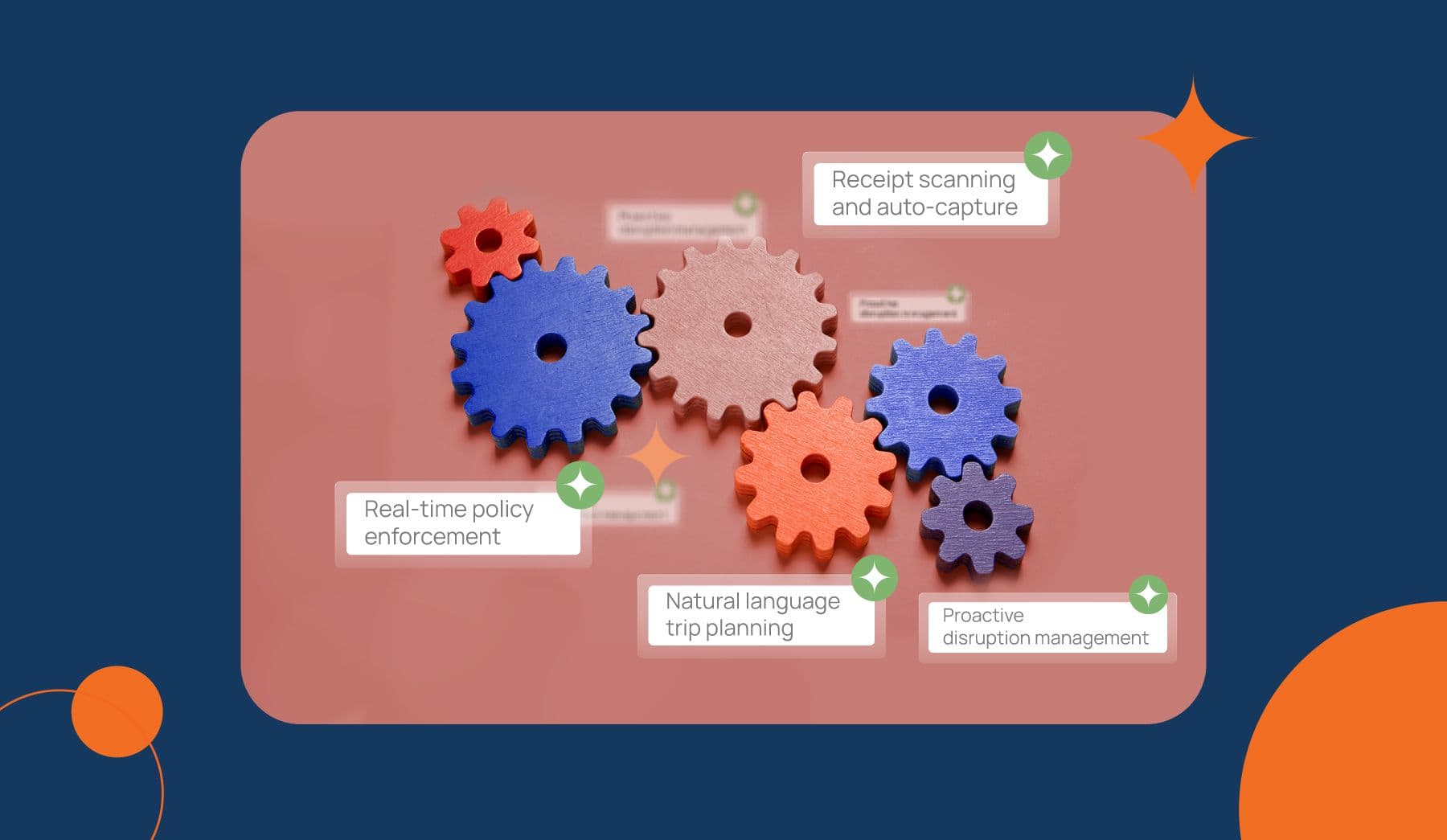
- Automated expense capture: Optical character recognition (OCR) can extract relevant information from receipts, reducing manual data entry.
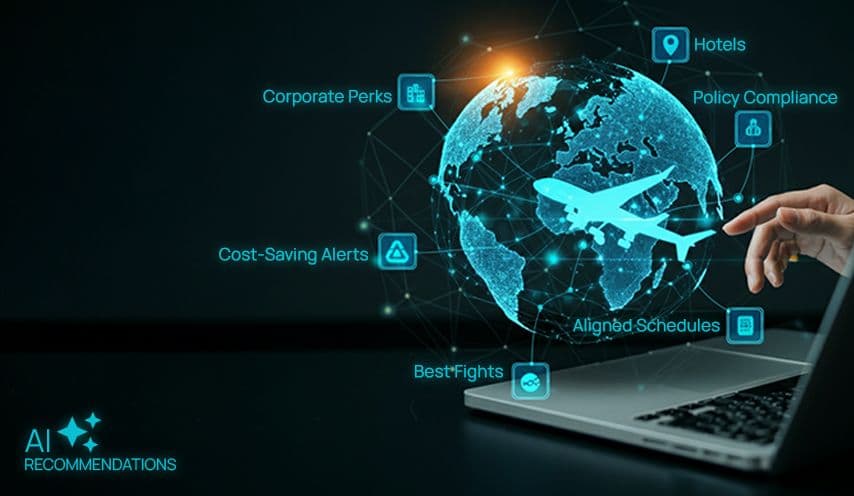
- Policy-aware booking assistance: Employees can receive travel options that take company rules and approval requirements into account.
- Expense review: Automated checks can flag missing documentation, potential duplicates, or transactions that require further review.
- Faster approvals: Configurable workflows can route requests to the appropriate approvers instead of relying on long email chains.
- Spend analysis: Analytics and AI-assisted insights can help teams investigate unusual spending patterns and identify areas that deserve attention.
These capabilities should not be treated as a substitute for financial controls. AI-generated recommendations still need appropriate validation, access controls, auditability, and human oversight for consequential decisions.
The business case is strongest when automation addresses a measurable bottleneck. Start with a repetitive process, establish its current cost and turnaround time, and measure the improvement after implementation.
Deloitte's 2026 study also found that more than eight in ten surveyed US travel managers reported active or recent initiatives to improve travel technology. Expense management was a leading area of investment.
The message is clear: technology is becoming an important part of how organizations manage rising costs while maintaining an effective travel programme.
7. Measure Savings Without Sacrificing the Purpose of Travel
Reducing the travel budget may look good on a spreadsheet. But what happens if fewer client visits lead to missed opportunities, or cheaper itineraries leave employees exhausted before important meetings?
Corporate travel exists to support business objectives. Cost reduction should be evaluated alongside the outcomes that travel enables.
A more balanced corporate travel spend management strategy considers both financial efficiency and business value.
For example, enterprises can track:
- Cost per trip alongside the purpose and outcome of travel
- Policy compliance alongside employee satisfaction
- Supplier savings alongside service quality
- Booking efficiency alongside approval turnaround time
- Travel budget variance alongside project and client requirements
This approach helps leaders distinguish between unnecessary expenditure and spending that supports revenue, delivery, collaboration, or customer relationships.
It also creates a stronger basis for decisions about travel policies. Instead of imposing the same restrictions on every employee and destination, enterprises can use data to determine where controls are needed and where flexibility creates greater value.
What Enterprise Travel Cost Optimization Looks Like in Practice
TripGain's published customer case studies offer examples of the potential impact of more structured travel management. Ozonetel reduced travel costs by 11–13% with TripGain's automated Travel & Expense approach.
These are customer-specific results, not guaranteed outcomes for every organization. Actual savings depend on existing processes, travel patterns, supplier arrangements, policy adoption, and implementation.
Nevertheless, they illustrate why enterprises should look beyond isolated discounts and assess the combined impact of booking controls, spend visibility, and process efficiency.
Bringing It All Together: A More Strategic Approach to Corporate Travel Spend Management
Corporate travel costs are influenced by factors that enterprises cannot fully control, from airfare fluctuations to changing business requirements. But the processes used to plan, book, approve, and reconcile travel are areas where organizations can make meaningful improvements.
A practical starting point is to establish a baseline of current spending, identify the largest sources of avoidable cost, and prioritize improvements that can be measured.
For some organizations, that may mean improving booking compliance. For others, it may involve connecting expense records, introducing automated approval workflows, or consolidating reporting across business units.
The important thing is to move away from managing travel spend through disconnected reports and reactive cost-cutting measures.
Instead, enterprises should aim to build a corporate travel management programme that connects policy, booking behaviour, expense data, and financial oversight.
With the right processes and technology, travel managers can make informed decisions, finance teams can gain greater control over expenditure, and employees can spend less time navigating administrative tasks.
Because the real measure of corporate travel cost control isn't how little an enterprise spends on every trip. It's how effectively that spending supports the business.

Disha Chatterjee
Senior Content MarketerIn this article
1.Stop Looking at Travel Spend as Just Flights and Hotels
2.Build Visibility Before Trying to Reduce Costs
3.Make Travel Policy Compliance Part of the Booking Process
4.Use Data to Reduce Last-Minute Booking Costs
5.Connect Travel and Expense Management
6.Put AI and Automation to Work on Repetitive Tasks
7.Measure Savings Without Sacrificing the Purpose of Travel
8.What Enterprise Travel Cost Optimization Looks Like in Practice
9.Bringing It All Together: A More Strategic Approach to Corporate Travel Spend Management

Related Blogs