What ‘Enterprise-Grade’ Really Means in Travel & Expense Technology
The term ‘enterprise-grade’ is widely used in travel and expense (T&E) technology, yet rarely explained with clarity. For many organizations, it has become shorthand for ‘advanced’ or ‘feature-rich’. In reality, enterprise-grade reflects something far more specific - a technology platform designed to operate reliably at scale, enforce governance, integrate deeply with enterprise systems, and deliver strategic insight, not just automation.
For travel administrators, finance leaders, procurement teams, and founders or CEOs, understanding this distinction is critical. As corporate travel rebounds globally and cost scrutiny intensifies, T&E technology now sits at the intersection of finance operations, compliance, employee experience, and strategic decision-making.
Built for Enterprise Scale and Organizational Complexity
Enterprise organizations are inherently complex. They operate across multiple geographies, currencies, regulatory environments, and internal structures. Travel policies vary by region or role, approval workflows span multiple layers, and reporting requirements differ across jurisdictions.
An enterprise-grade T&E platform is purpose-built for this reality. It supports multi-entity structures, localized tax and compliance logic, and configurable approval hierarchies, all while maintaining centralized visibility for finance and leadership teams. 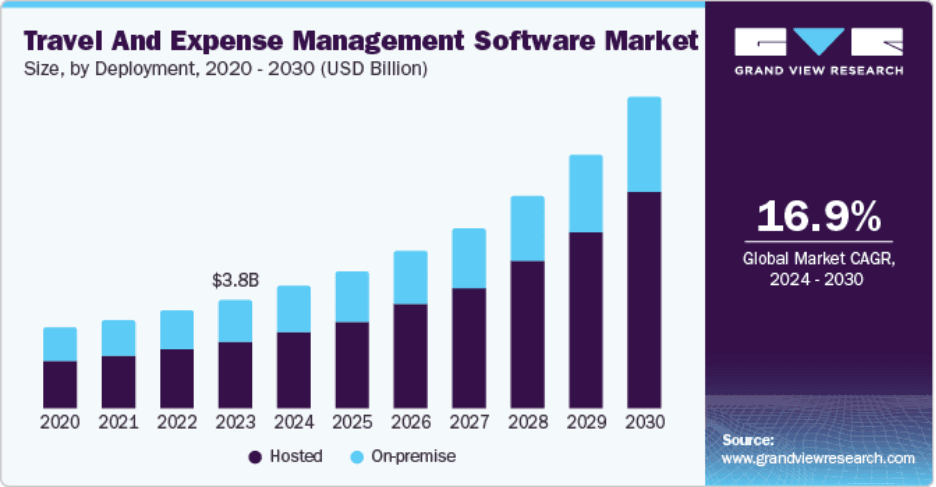
This is precisely why large organizations dominate adoption. According to Grand View Research, large enterprises account for approximately 60-64% of total travel and expense software revenue, significantly outweighing small and mid-market adoption. This reflects a clear pattern - the more complex the travel environment, the greater the need for enterprise-ready technology. Enterprise-grade systems are not about handling more transactions, they are about handling complexity without friction.
Automation That Reduces Risk, Not Just Effort
Automation has become a baseline expectation in T&E software. However, enterprise-grade automation focuses less on convenience and more on risk mitigation and financial control.
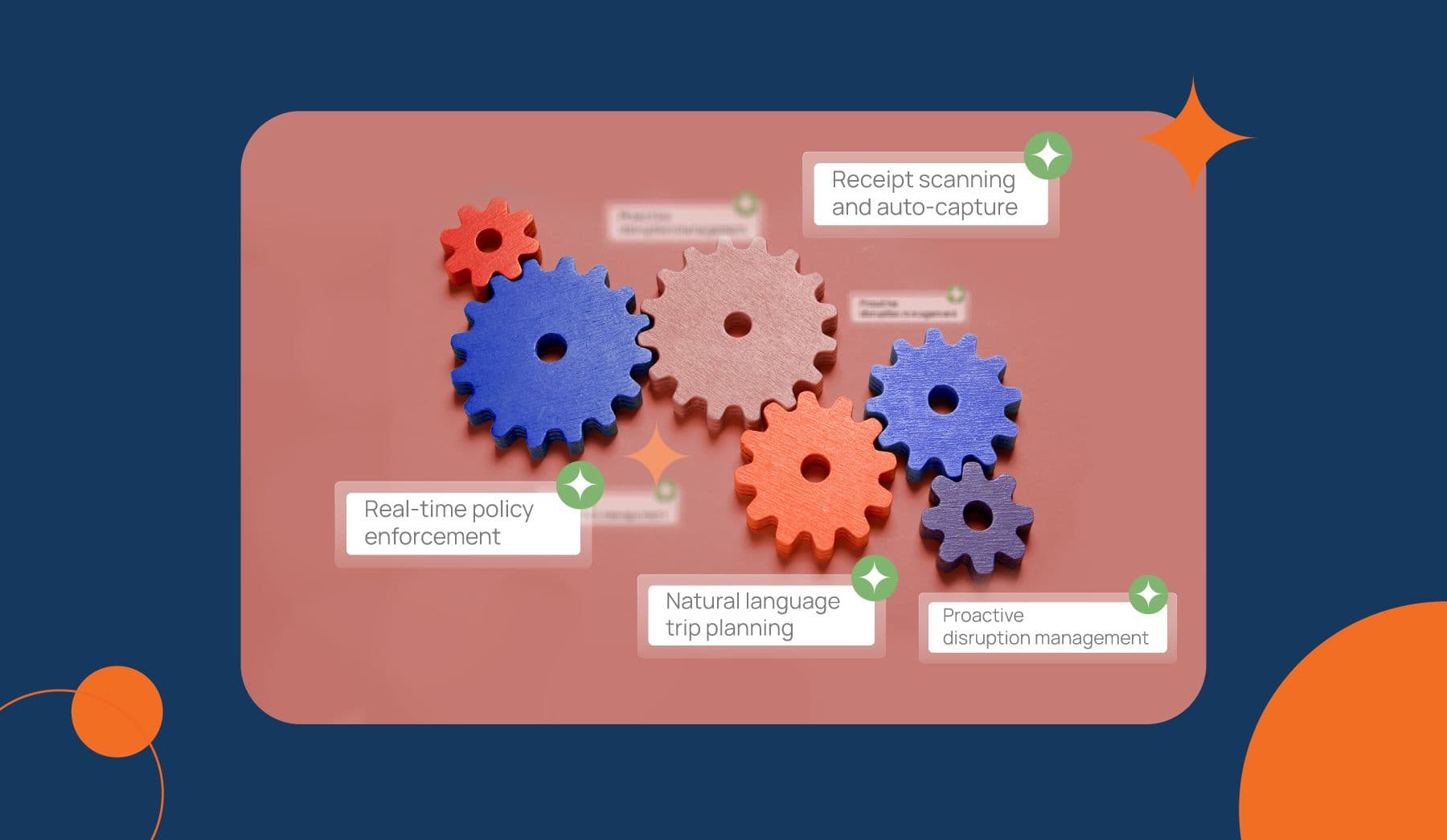
In large organizations, manual expense processing introduces measurable risk - duplicate claims, inconsistent policy enforcement, delayed approvals, and audit exposure. Advanced platforms embed rules and intelligence directly into workflows, ensuring compliance is evaluated at the point of submission, not weeks later during reconciliation.
This approach delivers tangible operational impact. Research from PMarketResearch indicates that automated travel and expense management solutions can cut manual processing times by up to 70%, underscoring the substantial productivity improvements achievable with AI-driven and rule-based systems. 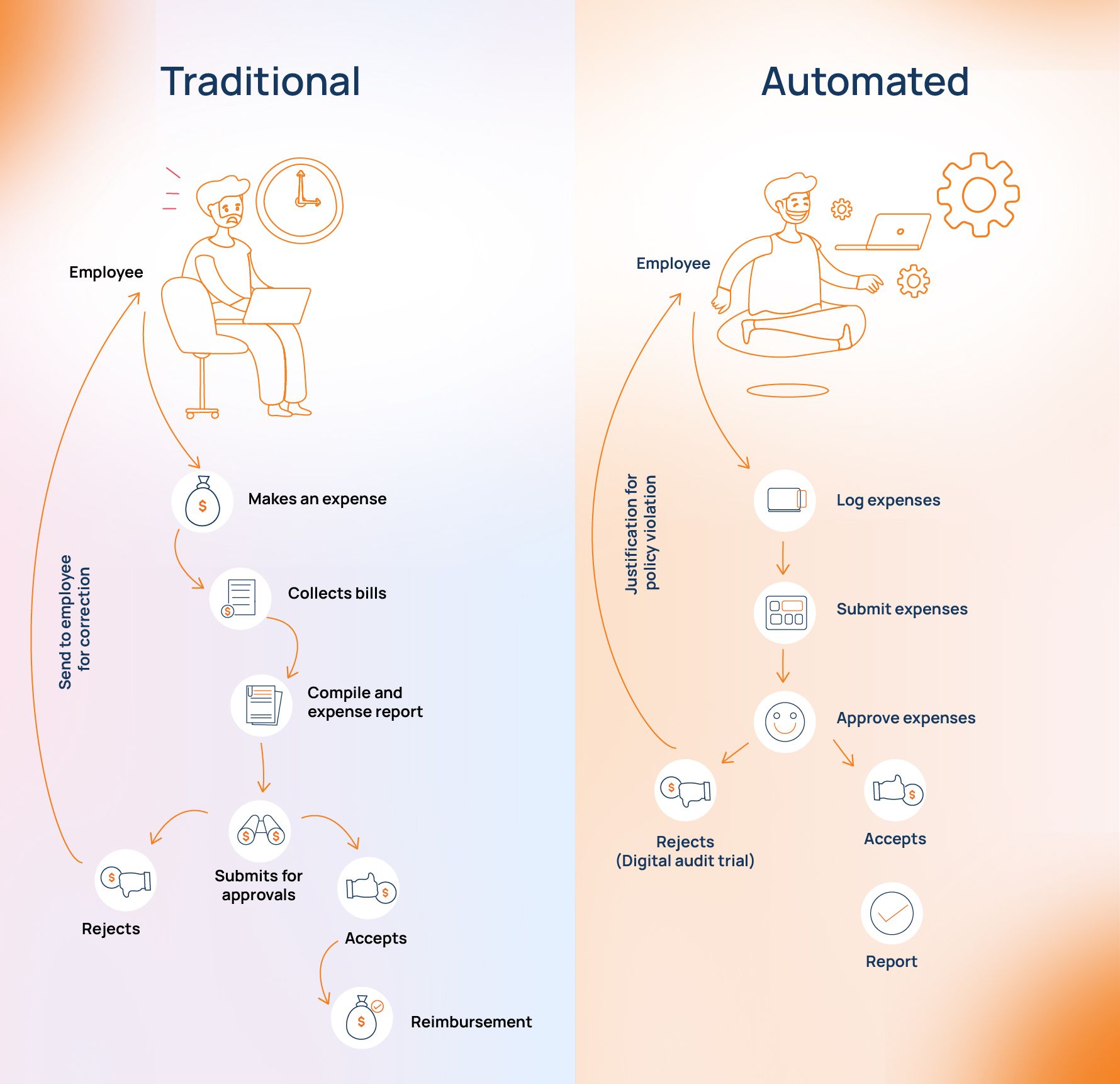 For finance teams managing thousands of transactions, this translates directly into faster close cycles and reduced operational overhead. Enterprise-grade automation is therefore not about replacing people, it’s about eliminating preventable risk at scale.
Real-Time Analytics That Enable Strategic Decisions
One of the most critical differences between basic and enterprise-grade T&E platforms lies in data intelligence.
Basic systems tell you what has already happened. Enterprise-grade platforms help you understand why it happened and what to do next. They consolidate travel and expense data across regions, departments, and vendors, enabling real-time insights into spend patterns, budget performance, and supplier compliance.
This capability transforms T&E data into a strategic asset. Finance and procurement teams can forecast travel budgets more accurately, identify leakage against negotiated rates, and assess policy effectiveness across the organization.
As enterprises place greater emphasis on data-driven decision-making, analytics is no longer a ‘nice-to-have'. It is the core reason organizations upgrade to enterprise-grade platforms.
Security, Governance, and Compliance as Foundational Requirements
In enterprise environments, travel and expense data is inherently sensitive. It includes employee information, payment details, corporate card usage, and financial records, all of which must be protected and auditable.
Enterprise-grade platforms are built with governance at their core. Role-based access controls, encrypted data storage, complete audit trails, and compliance-ready reporting ensure that organizations can meet both internal and external requirements with confidence.
This level of security is particularly important for multinational organizations operating under varying data protection and financial regulations. Without it, even well-intentioned travel programs can expose the business to compliance and reputational risk.
Cloud-First Architecture and Deep Enterprise Integration
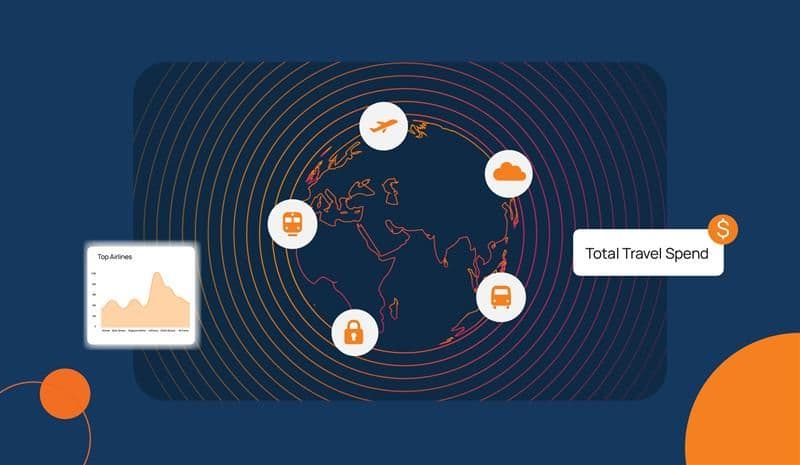
Cloud adoption has become a defining characteristic of enterprise-grade T&E technology. Cloud platforms provide real-time access, faster innovation cycles, and significantly lower IT maintenance overhead compared to legacy on-premise systems. 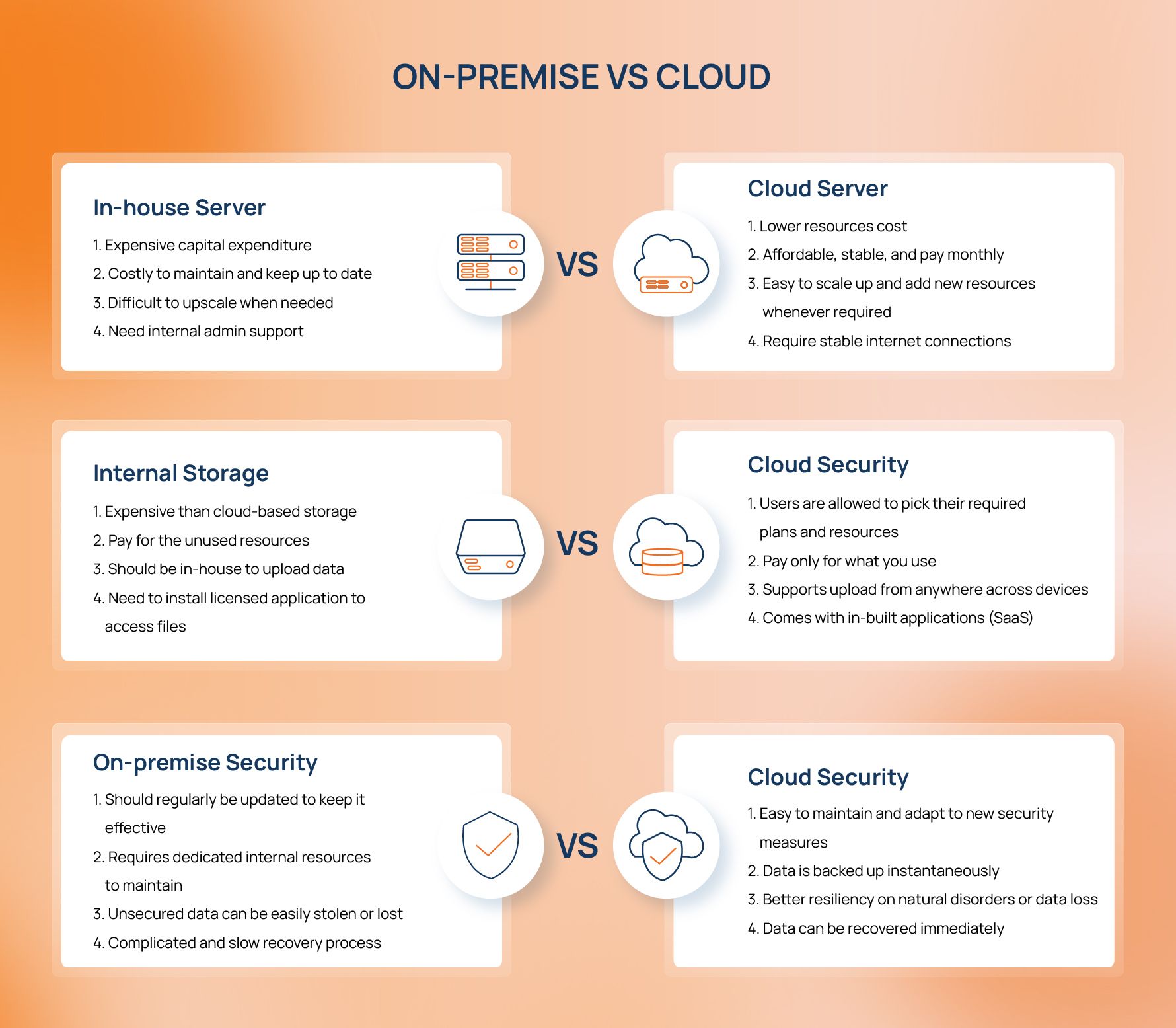 This shift is already well underway. According to Mordor Intelligence, cloud-based solutions now account for over 73% of enterprise T&E deployments, with on-premise systems steadily declining. This trend reflects enterprise priorities - scalability, flexibility, and seamless integration.
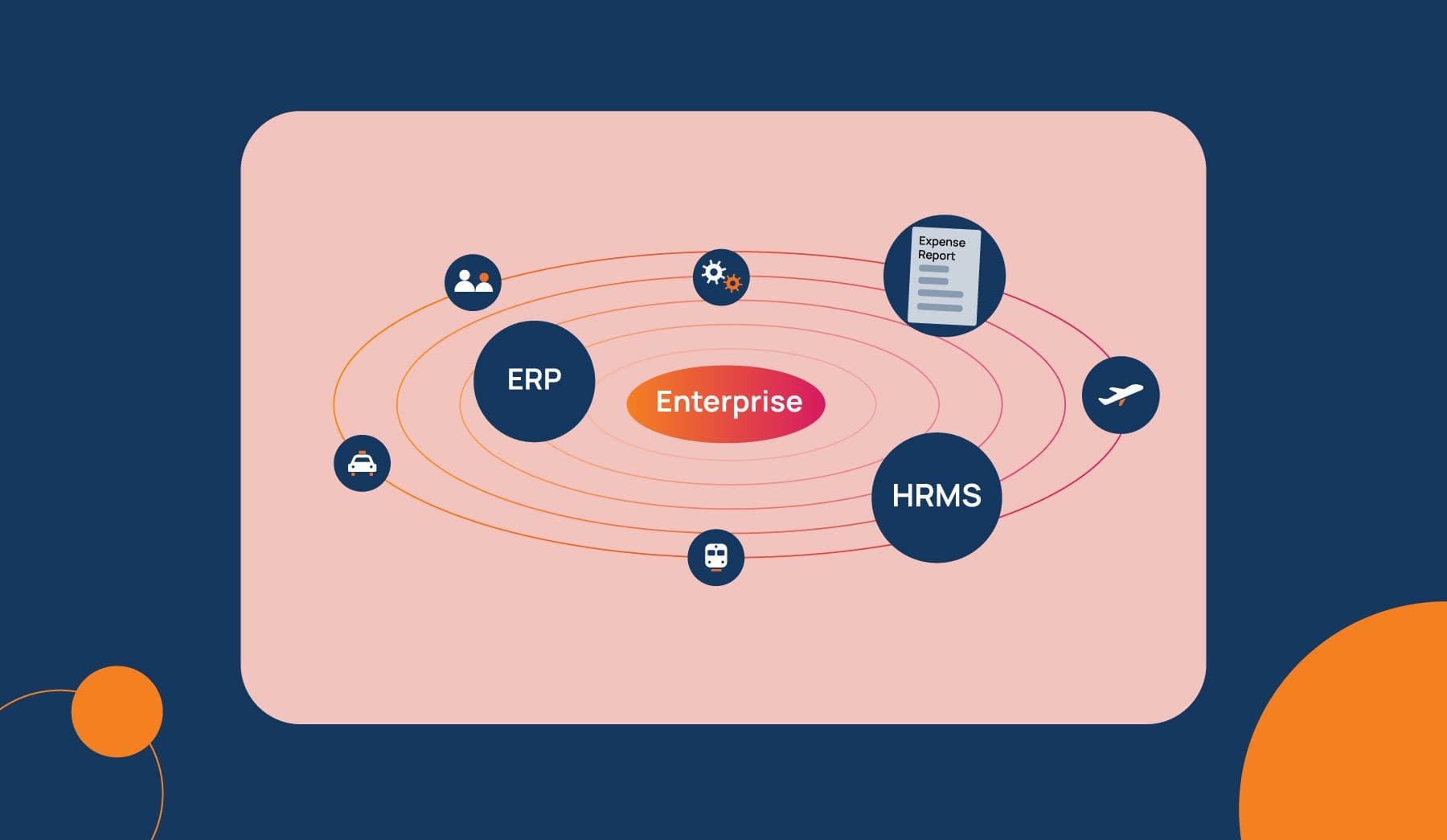
Equally important is how these platforms integrate into the broader enterprise ecosystem. ERP systems, HR platforms, accounting software, and payment providers must work together seamlessly. Enterprise-grade T&E solutions function as part of this ecosystem, ensuring a single source of truth across finance operations.
Proactive Policy Enforcement at the Point of Action
Policy compliance remains one of the biggest challenges in corporate travel and expense management. In many organizations, enforcement happens after expenses are submitted, leading to rework, delays, and employee dissatisfaction.
Enterprise-grade platforms take a different approach. Policies are embedded directly into booking and expense workflows, guiding employees toward compliant choices in real time. Out-of-policy claims are flagged immediately, approvers receive contextual insights, and finance teams gain confidence that spend aligns with corporate guidelines.
This proactive enforcement model reduces friction while strengthening governance, an outcome that matters equally to employees and leadership.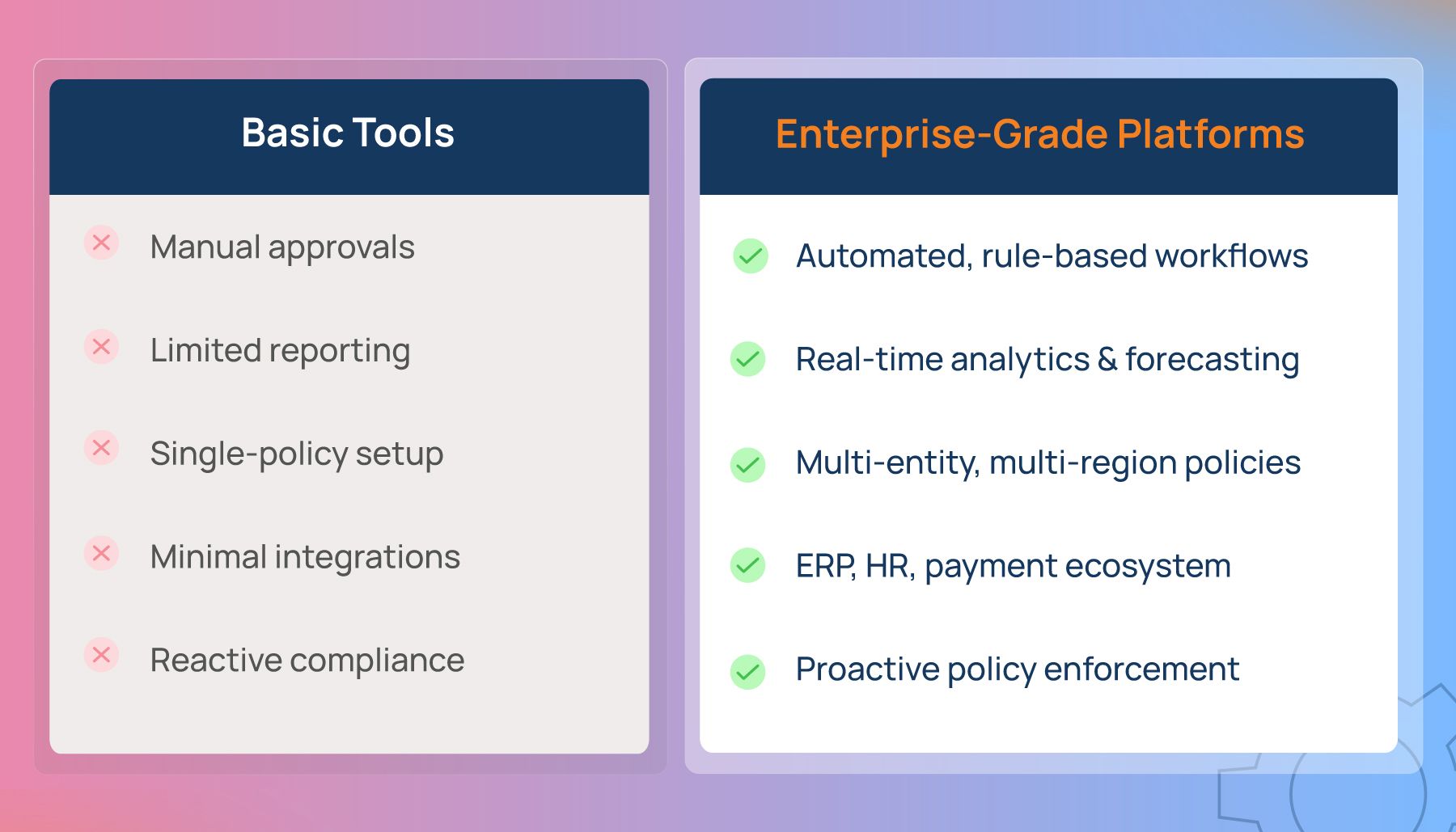
Final Thoughts
Taken together, these shifts paint a clear picture. Enterprise organizations are not adopting new T&E platforms simply to digitize existing processes. They are investing in systems that deliver scale, intelligence, security, and integration as standard.
The dominance of cloud adoption, the concentration of market revenue among large enterprises, and the measurable efficiency gains from AI-driven automation all reinforce one conclusion - enterprise-grade travel and expense technology is now a strategic requirement, not an operational upgrade.
‘Enterprise-grade’ is not a marketing label, it is a benchmark. In travel and expense management, it defines platforms capable of supporting complex organizations, enforcing financial discipline, and delivering insights that inform better business decisions.
For travel admins, finance leaders, procurement teams, and business executives, choosing enterprise-grade T&E technology is ultimately about future-proofing the organization, ensuring that as travel grows, governance strengthens rather than erodes.
FAQ
1. What does enterprise-grade travel and expense software mean?
Enterprise-grade T&E software is designed to handle large-scale, complex operations with advanced automation, security, analytics, and deep enterprise integrations.
2. How is enterprise-grade T&E software different from basic expense tools?
Unlike basic tools, enterprise-grade platforms support multi-entity operations, real-time policy enforcement, ERP integrations, and strategic analytics.
3. Why do large enterprises need enterprise-grade travel and expense technology?
Large enterprises need enterprise-grade T&E systems to manage global travel complexity, ensure compliance, control costs, and gain real-time financial visibility.
4. Is cloud-based travel and expense software suitable for enterprises?
Yes, cloud-based T&E platforms are preferred by enterprises due to their scalability, flexibility, lower IT overhead, and seamless system integration.
5. How does enterprise-grade T&E software improve cost control and compliance?
Enterprise-grade T&E software improves cost control and compliance through automated policy enforcement, AI-driven analytics, and real-time spend monitoring.

Disha Chatterjee
Senior Content MarketerIn this article
1.Built for Enterprise Scale and Organizational Complexity
2.Automation That Reduces Risk, Not Just Effort
3.Real-Time Analytics That Enable Strategic Decisions
4.Security, Governance, and Compliance as Foundational Requirements
5.Cloud-First Architecture and Deep Enterprise Integration
6.Proactive Policy Enforcement at the Point of Action
7.Final Thoughts
8.FAQ

Related Blogs