Corporate MICE Management: How to Coordinate Group Travel, Venues, and Events Without the Chaos
Your company is hosting a three-day leadership summit for 200 employees travelling from 12 countries. The venue is booked, the agenda is approved, and invitations are sent.
Then the changes begin. Three executives need new flights. The hotel has mixed up room reservations. A supplier revises its quotation, and finance team wants to know why the budget has increased.
Suddenly, organizing an event feels like running an airport control tower.
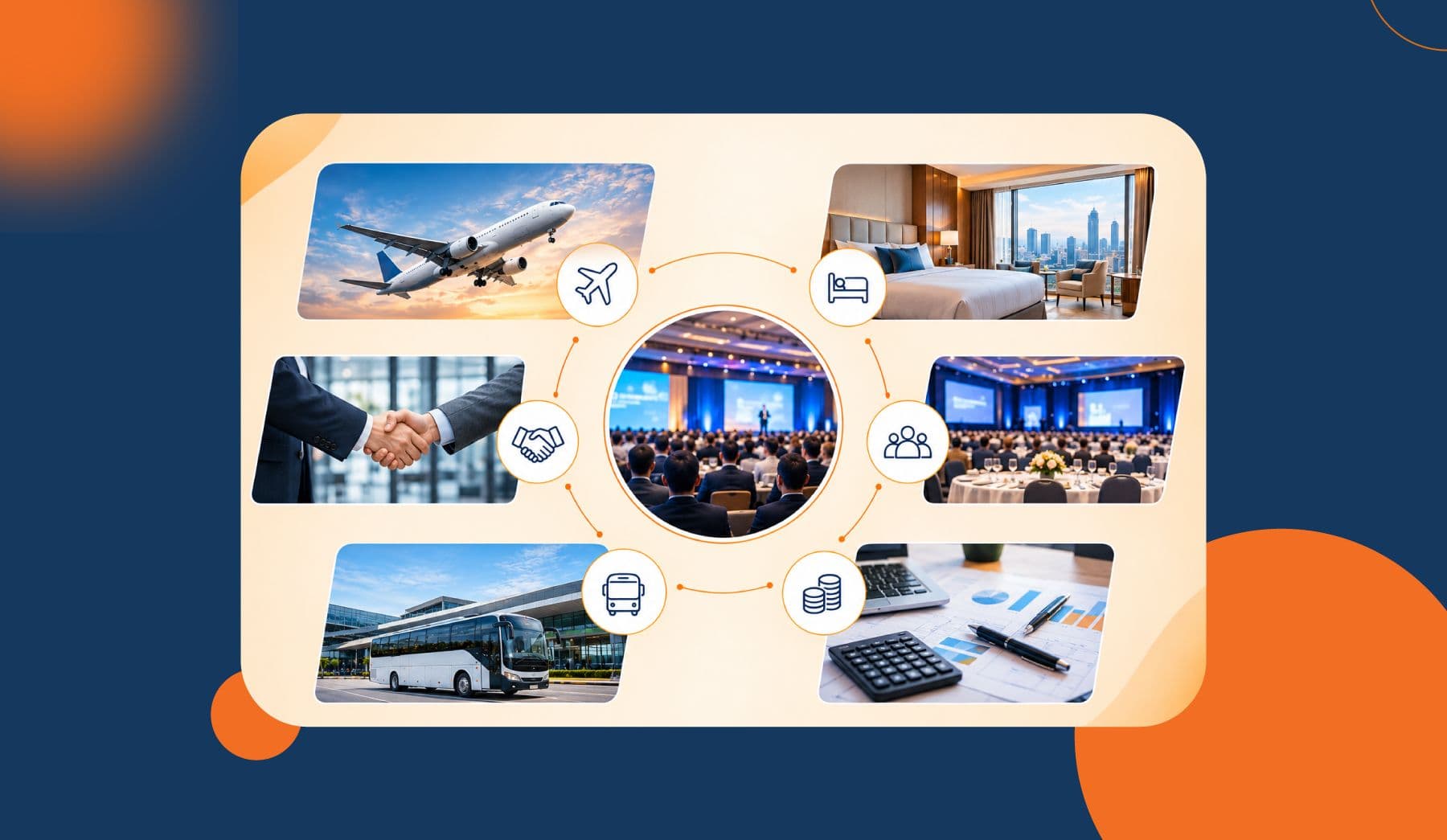
This is where corporate MICE management comes in. MICE stands for Meetings, Incentives, Conferences, and Exhibitions. Managing these programmes involves much more than booking a venue. It requires coordinating travel, accommodation, suppliers, budgets, and attendee expectations.
The scale of the industry makes effective planning particularly important. The Events Industry Council's 2026 Global Economic Significance of Business Events Study reported that business events brought together 1.65 billion participants worldwide in 2025 and generated US$1.3 trillion in direct spending.
These figures cover business events broadly, rather than corporate MICE programmes alone, but they highlight the scale of the ecosystem.
So, how can businesses coordinate complex events without losing control of costs, timelines or the attendee experience?
What Is Corporate MICE Management?
Corporate MICE management is the process of planning and coordinating business meetings, incentive trips, conferences, and exhibitions, including the travel, accommodation, venues, suppliers, and expenses involved.
Each category has a different purpose:
Meetings: Leadership offsites, board meetings, and client gatherings
Incentives: Reward trips, sales incentive programmes, and employee recognition experiences
Conferences: Industry events, product launches, and company-wide gatherings
Exhibitions: Trade shows, expos, and product showcases
Despite their differences, these activities share one challenge: multiple arrangements must come together at the right time and within budget.
Why Corporate MICE Planning Gets Complicated
1. Coordinating Group Travel
When hundreds of attendees travel from different cities, their itineraries rarely align perfectly. Some need connecting flights, others require flexible tickets, and last-minute changes can affect hotel check-ins and airport transfers.
Without a structured group travel management process, organizers may end up tracking reservations across spreadsheets, emails, and booking confirmations.
A centralized booking process, clear travel deadlines, and accessible itinerary information help teams identify missing reservations, coordinate changes and keep attendees informed.
2. Looking Beyond the Venue Price
A venue's quoted rate rarely tells the whole story. Catering, audiovisual equipment, internet access, service charges, parking, and minimum-spend commitments can increase the final bill.
Before confirming a venue, evaluate its total cost, accessibility, accommodation options, cancellation conditions, and transport requirements. The cheapest quotation is not necessarily the best value.
3. Managing Multiple Suppliers
Hotels, airlines, transport operators, caterers, and production agencies all work to different timelines and contractual terms.
Maintain a central supplier register with agreed rates, deliverables, payment milestones, cancellation conditions, deadlines and contact details. This gives everyone a shared reference point and reduces confusion when plans change.
4. Preventing Budget Overruns
MICE expenditure is spread across travel, accommodation, venue hire, meals, transport and event production. Some costs are committed months in advance, while others emerge during or after the event.
If finance only reviews expenditure at the end, opportunities to control spending may already have passed.
Effective MICE cost management means tracking budgets, commitments, and actual expenses throughout the planning process.
Six Ways to Manage Corporate MICE Programmes More Effectively
1. Start With a Clear Event Brief
Define the event's purpose before contacting suppliers. Is it a leadership retreat, customer conference, sales kick-off or incentive trip?
Establish the expected attendance, destination, dates, travel requirements, budget, approval limits, and responsibilities. These details guide supplier selection and prevent avoidable revisions later.
2. Create a Master Timeline
Event planning involves interconnected tasks. Hotel room blocks depend on attendance, catering depends on final numbers, and production arrangements depend on the agenda.
Create a timeline covering supplier sourcing, approvals, registrations, travel bookings, final confirmations and post-event reconciliation. Assign an owner and deadline to each task, allowing extra time for decisions that depend on external suppliers.
3. Integrate Group Travel Planning
Treat attendee travel as part of the event plan, not a separate administrative exercise.
Define booking deadlines, approved travel options, policy exceptions and procedures for itinerary changes. Corporate travel management platforms can help centralize bookings, apply company policies, and make itinerary information easier to access.
This reduces the need for organizers to chase individual attendees for updates.
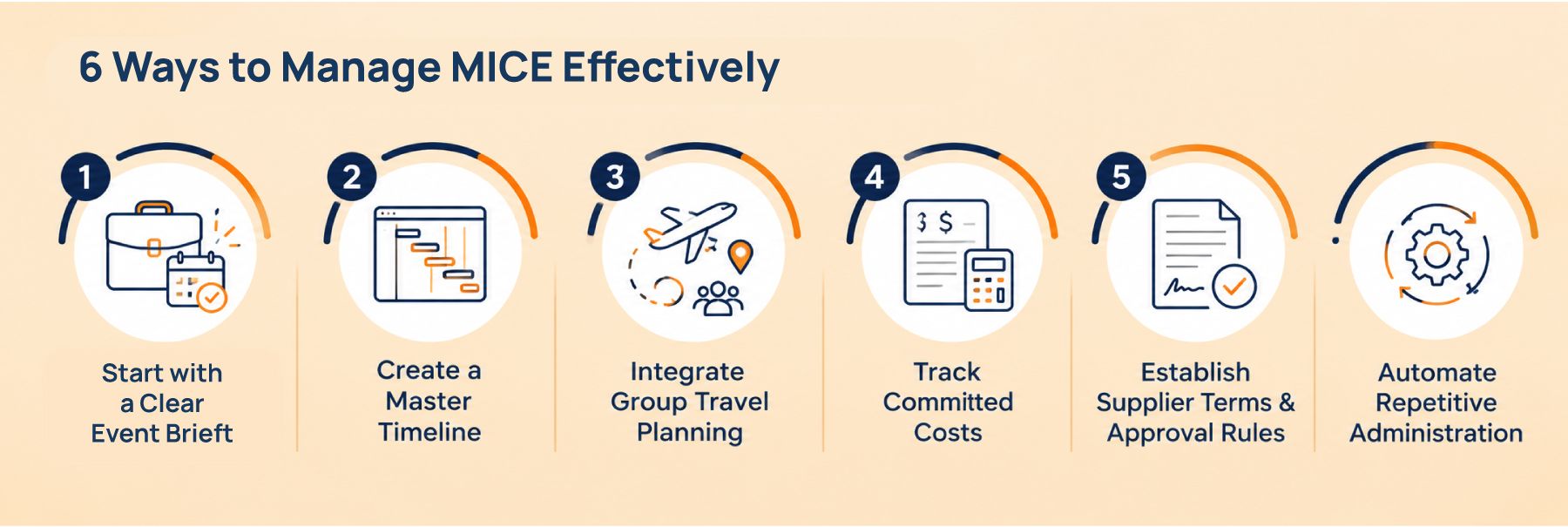
4. Track Committed Costs
Consider an event with an approved budget of $100,000. The venue accounts for $30,000, accommodation for $25,000 and travel for $20,000.
Although some payments may still be outstanding, $75,000 is already committed. The remaining budget is $25,000, not $100,000.
A useful tracker distinguishes between the approved budget, committed costs, actual expenditure, and forecast remaining expenses. Review these figures regularly to identify budget variances while corrective action is still possible.
5. Establish Clear Supplier Terms and Approval Rules
Negotiate more than headline prices. Clarify cancellation windows, hotel attrition clauses, room-block deadlines, taxes, overtime charges, and payment milestones.
Internally, define who can approve higher rates, additional attendees or urgent expenses. Clear rules allow teams to respond quickly without bypassing financial controls.
6. Automate Repetitive Administration
Chasing receipts, updating spreadsheets, and reconciling invoices can consume hours across a large event programme.
Technology can simplify parts of this work. Travel platforms can centralize booking information, while expense management tools can capture receipts, route claims for approval and support reconciliation.
The goal is to reduce repetitive administration so event teams can focus on attendee experience and resolving issues that require human judgement.
The Role of Technology in Modern MICE Management
MICE programmes often span travel, event planning, procurement and finance. When these functions operate independently, information becomes fragmented. A booking change may not reach the event coordinator, or an additional hotel night may not be reflected in the budget.
Connected workflows can help bridge these gaps.
Corporate travel and expense management platforms can support policy-based bookings, itinerary visibility, expense approvals, and consolidated spend reporting. Integrations with finance and enterprise systems can also reduce duplicate data entry.
Technology is not a substitute for good planning. However, combined with clear processes and responsibilities, it can make MICE programmes easier to coordinate and scale.
How to Measure MICE Programme Success
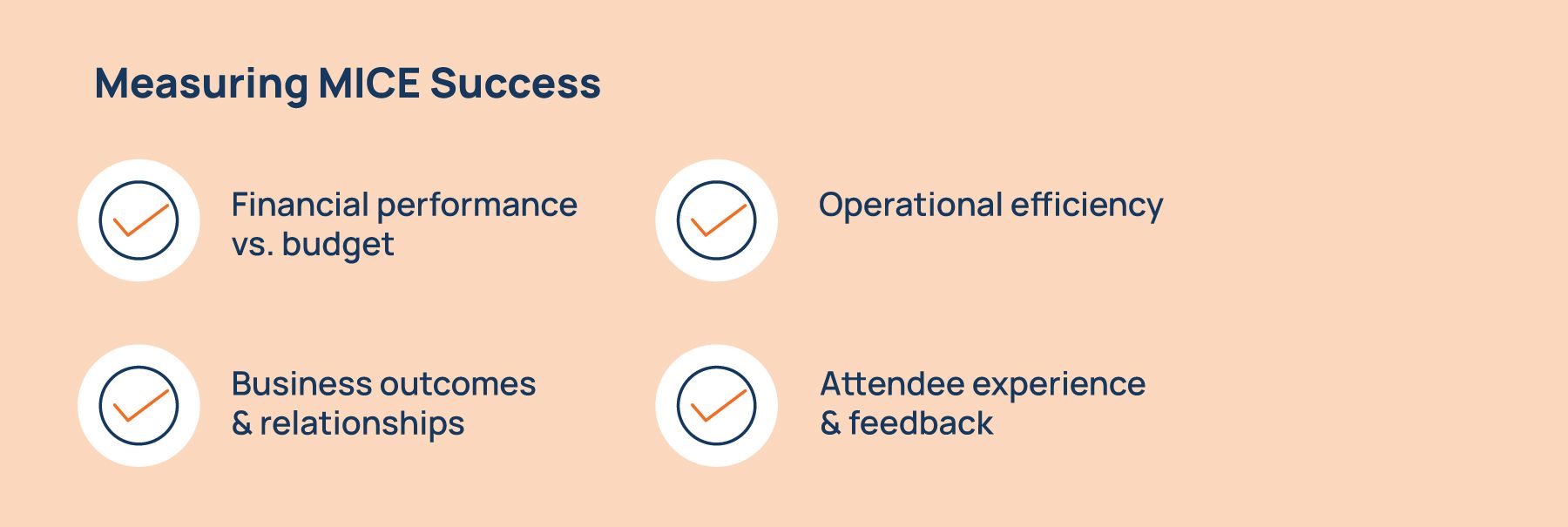
Attendance alone does not tell you whether an event delivered value. Businesses should evaluate financial performance, operational efficiency, attendee experience and business outcomes.
Track final expenditure against budget, cost per attendee, booking changes, policy exceptions and the time required to reconcile expenses. Collect feedback on travel, accommodation and event logistics.
Then connect results to the event's purpose. A customer conference might be measured by qualified leads and follow-up meetings, while a leadership offsite could be evaluated through decisions made and actions completed.
The Events Industry Council's 2026 study found that 70% of surveyed respondents identified relationship-building through face-to-face interaction as the event outcome most difficult to replicate. This reinforces the importance of measuring outcomes beyond immediate expenditure.
Better Events Begin with Better Coordination
Great corporate events may look effortless to attendees, but they depend on hundreds of decisions involving travel, venues, suppliers, budgets and people.
Effective corporate MICE management does not eliminate every unexpected change. It creates a process that can handle those changes without losing control of the schedule, budget or attendee experience.
Start with clear objectives, coordinate group travel early, track committed costs, establish supplier responsibilities and use technology to reduce repetitive work. Review each event's performance and apply those lessons to the next one.
Better coordination means fewer last-minute surprises and more time to focus on what the event was organised to achieve.

Disha Chatterjee
Senior Content MarketerIn this article
1.What Is Corporate MICE Management?
2.Why Corporate MICE Planning Gets Complicated
3.Six Ways to Manage Corporate MICE Programmes More Effectively
4.The Role of Technology in Modern MICE Management
5.How to Measure MICE Programme Success
6.Better Events Begin with Better Coordination

Related Blogs