AI Without Guardrails: Why Businesses Need Government Oversight to Trust AI at Scale
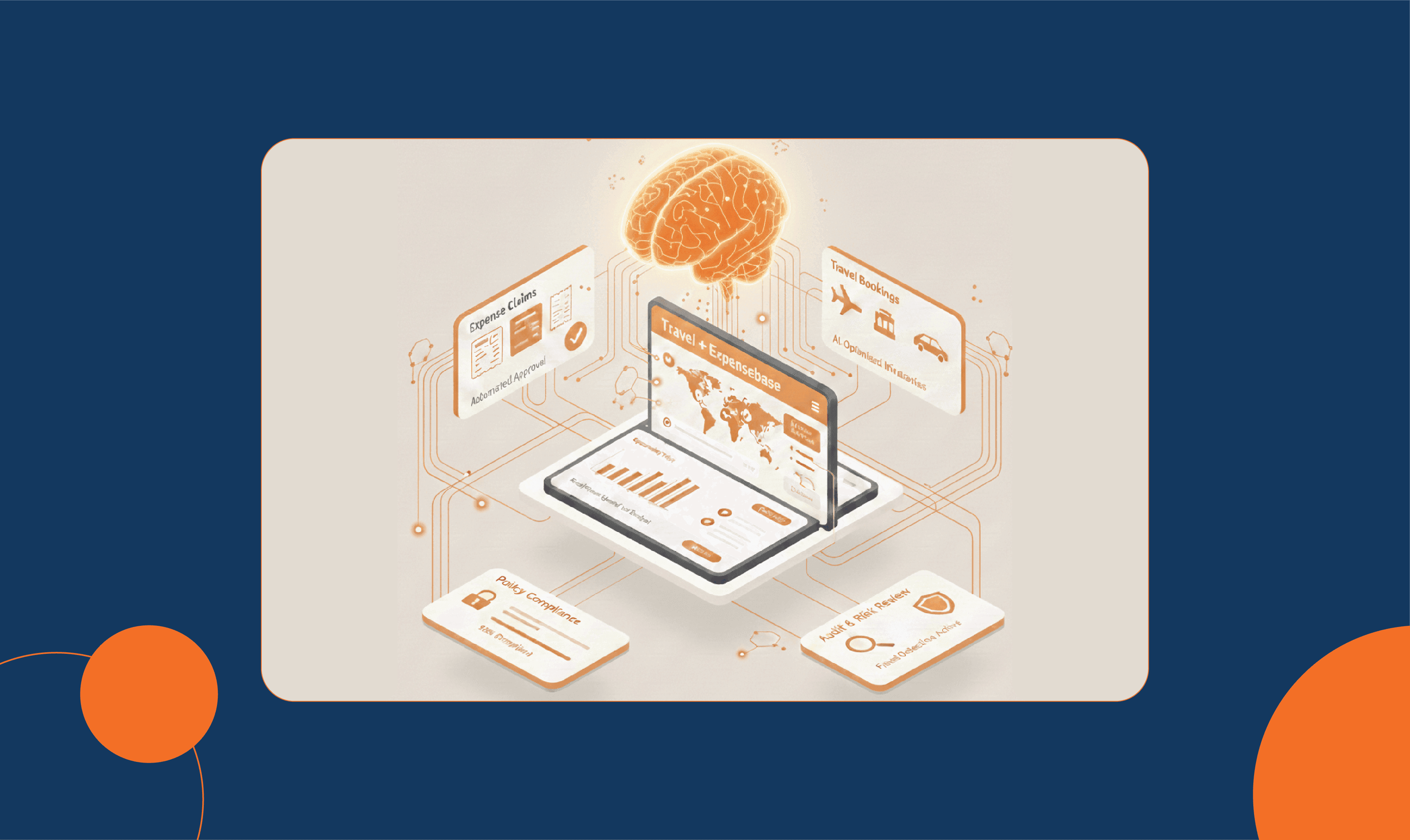
AI is no longer experimental within enterprises, it is increasingly embedded in business-critical workflows. For corporate travel and expense ecosystems, AI today:
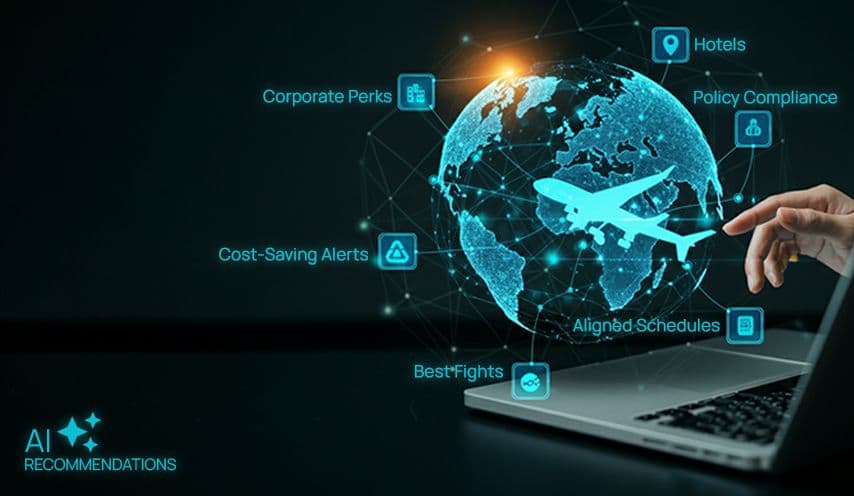
- Recommends flights and hotel options based on cost, policy, and convenience
- Flags compliance violations during booking
- Automates expense categorization and anomaly detection
- Advises on budget forecasting and policy adjustments
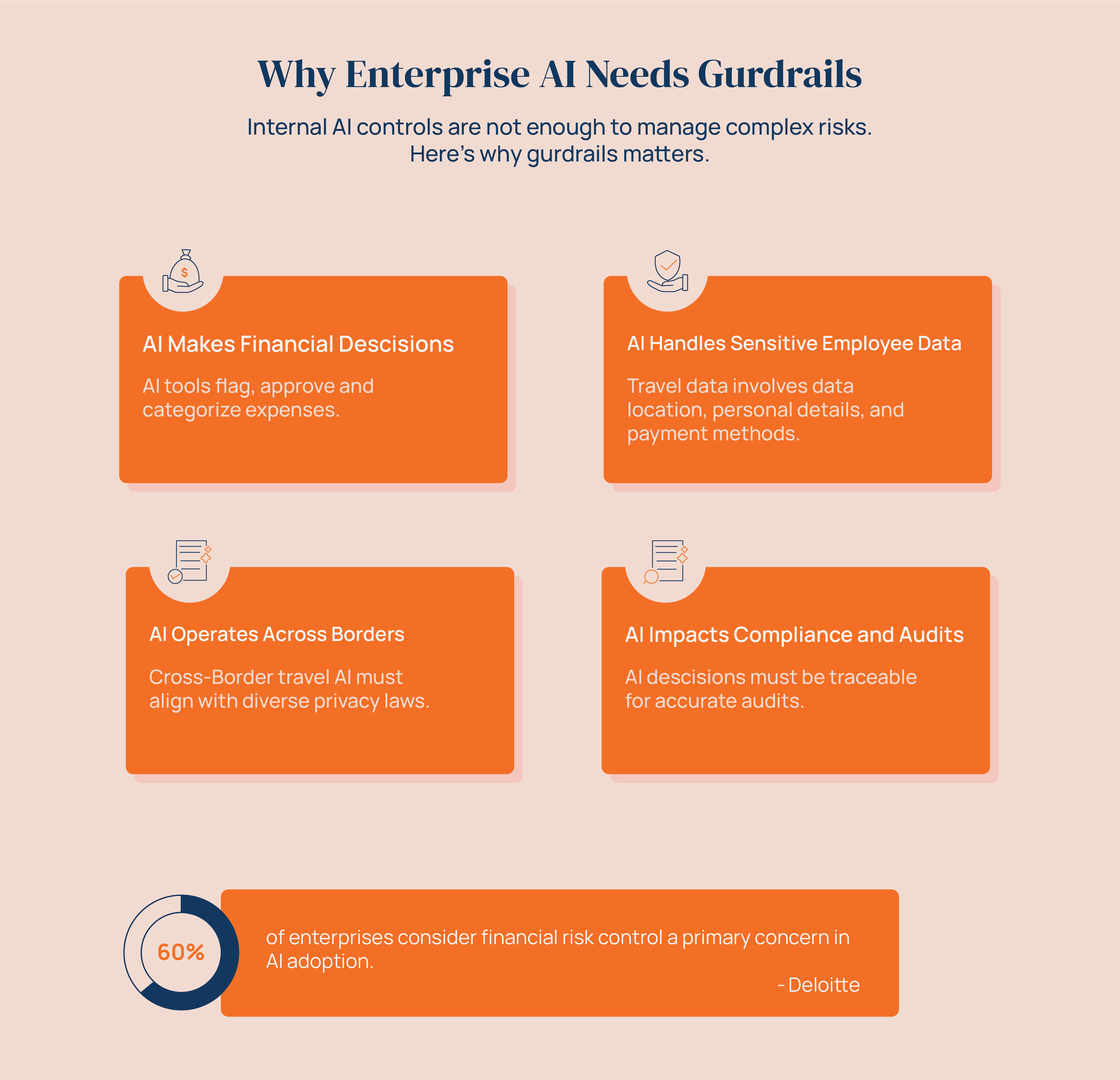
While these capabilities offer efficiency and cost benefits, they also raise serious questions like, ‘How transparent are these AI decisions?’, ‘Can they be audited?, ‘Do they align with regulatory expectations and employee rights?’. After all, when AI optimizes outcomes at machine speed, even small blind spots can scale just as quickly.
According to Deloitte’s State of AI in the Enterprise 2026 overview, enterprises globally are moving from experimentation to scaling AI, with about 60% of workers now equipped with approved AI tools and 25% of companies putting 40% or more of their AI projects into production. Yet this rapid adoption is happening amid significant concern over governance and risk readiness.
Self-Regulation Is Not Enough for Enterprise Risk Management
Many vendors promote internal AI ethics frameworks or self-certification as sufficient for risk control. However, for complex enterprise systems, self-regulation suffers from several limitations:
Lack of independent validation: Internal audits are seldom transparent to customers, auditors, or regulators
Inconsistent practices across vendors: Companies cannot easily benchmark ‘safe AI’ practices without common external standards
Escalating complexity of AI tools: Autonomous, adaptive systems like agentic AI operate beyond simple rule sets, making internal governance harder to standardize
Deloitte’s research confirms that governance is lagging adoption. While agentic AI, systems that perform multi-step autonomous tasks, is growing fast, only about 21% of companies report having mature governance models in place for such systems. This governance gap creates exposure to privacy, security, and compliance risks across global operations.
In travel and expense contexts, relying solely on internal regulations means inconsistent policy enforcement, opaque decision logic, and potential regulatory violations - situations where ‘the system decided’ offers little comfort to finance teams or auditors during scrutiny.
A 2024 ruling by Canada’s British Columbia Civil Resolution Tribunal confirmed that companies remain legally liable for information generated by their AI chatbots, reinforcing that ‘the system said so’ is not a valid defense without regulatory accountability. (Source)
Corporate Travel: A Strategic and High-Risk AI Domain
AI in corporate travel is not ‘nice-to-have', it directly influences financial outcomes, employee experience, and compliance postures.
Business travel spend is projected to exceed USD 1.5 trillion globally by 2026, with digital and AI tools central to managing this scale efficiently. However, when AI is making decisions that affect which supplier a traveler selects, whether a booking complies with policy, or how an expense is categorized, those decisions must be:
- Explainable: for audit trails and compliance investigations
- Consistent: across employees, locations, and spend categories
- Aligned with legal frameworks: such as data protection and employee rights
Without external accountability, enterprises may adopt AI that appears optimal on paper but fails in practice - for example, an algorithm that aggressively minimizes costs by rejecting compliant bookings during peak business events, technically ‘saving money’ while eroding employee trust and productivity. These gaps often surface late, during audits or regulatory reviews, when correction becomes expensive.
In a widely reported 2024 case, Air Canada was held responsible after its AI chatbot provided incorrect fare rules to a customer, resulting in financial loss and a court ruling that emphasized the risks of deploying ungoverned AI in travel decision-making.
Government Oversight as a Trust Enabler
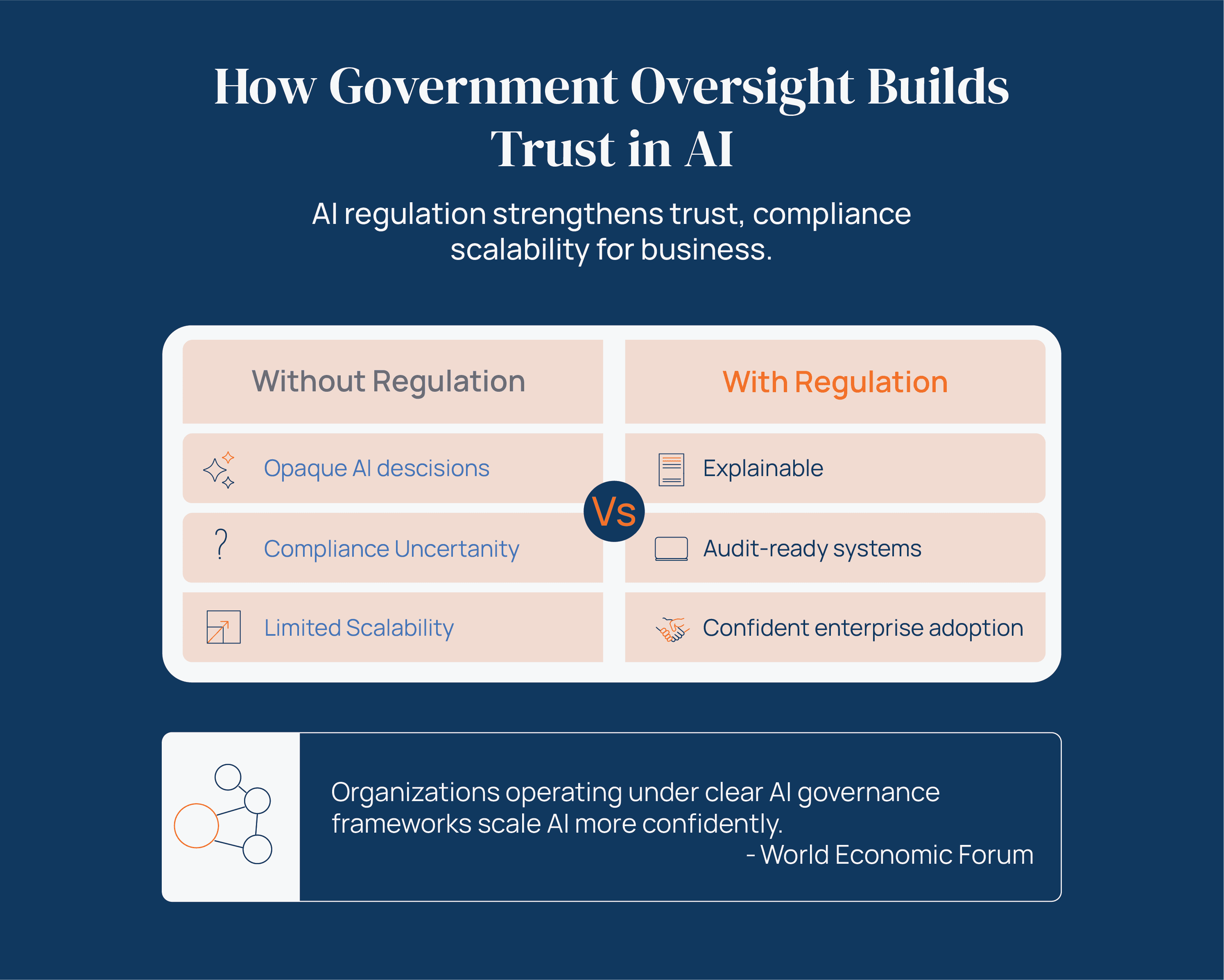
A common misconception is that oversight and regulation will slow innovation. In enterprise environments, the opposite often holds true - clear guardrails reduce uncertainty and accelerate responsible adoption.
The World Economic Forum’s Global AI Governance Report emphasizes that when organizations operate under established governance frameworks, they become more confident in deploying AI, especially in areas that directly affect decision-making and compliance. Oversight frameworks set common expectations for:
- Data privacy and usage limits
- Explainability and auditability of automated decisions
- Accountability pathways when AI incurs errors or bias
With these guardrails, enterprises can focus on scaling AI responsibly, rather than spending disproportionate time on ad-hoc risk mitigation. In practice, this means leaders spend less time asking, ‘Is this allowed?’ and more time asking, ‘How fast can we scale this safely?’
The OECD’s 2025 report on governing with artificial intelligence stresses that government-led AI frameworks are essential to ensure accountability, transparency, and trust, particularly where automated systems affect economic decisions and public confidence.
What Effective Regulation Looks Like for Enterprise SaaS
Not all regulations are equally impactful. Effective AI regulation should be risk-based, transparent, and structured, not one-size-fits-all.
The EU’s AI Act, currently progressing through regulatory frameworks proposes a tiered approach that classifies AI systems by risk and requires additional documentation and oversight for systems that affect human rights, safety, or legal compliance. This kind of structure provides enterprises with clear expectations without stifling innovation.
For corporate travel platforms, effective regulation would require:
- Transparency of AI logic and underlying data sources
- Human-override mechanisms for decisions that affect financial or compliance outcomes
- Documented audit trails that can be reviewed by internal and external auditor
- Clear accountability when AI outputs cause errors or customer dissatisfaction
According to Deloitte’s broader research on generative AI implementation challenges, 36% of enterprises cite regulatory compliance concerns, and 29% point to the absence of formal governance models as reasons for limiting AI deployment. This reinforces a simple reality - regulation rarely slows adoption of ambiguity does.
Government CIO research highlights that AI deployed in travel and security environments delivers value only when governed by clear oversight models that balance automation with accountability and human control.
Regulation Drives ROI and Accelerates Adoption
Effective AI regulation and governance are not merely risk-mitigation tools; they are value enablers. When enterprises operate within clear, well-defined AI guardrails, they gain the confidence to scale AI across functions and geographies.
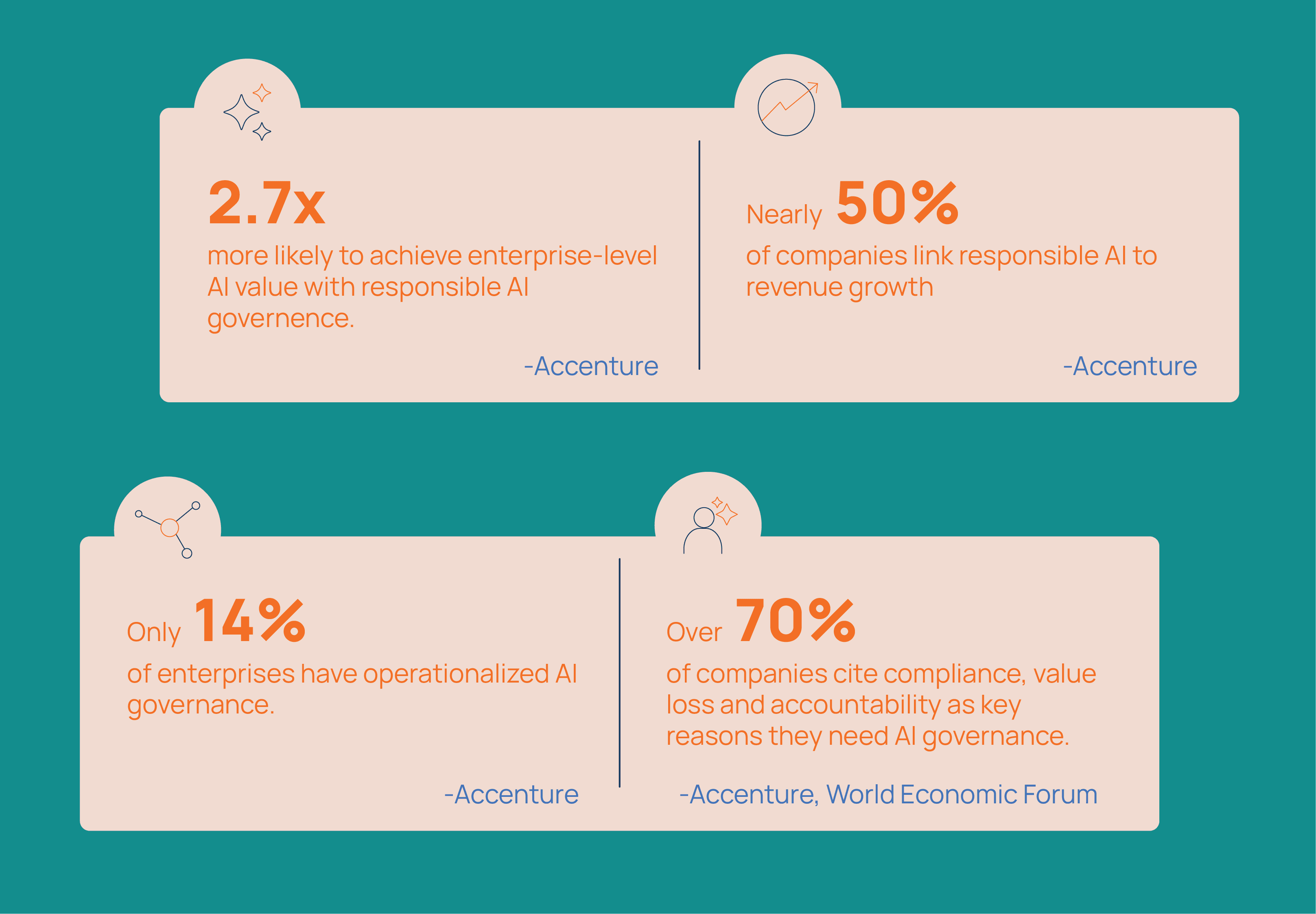
Accenture’s research highlights this connection clearly. In its Making Reinvention Real with Gen AI report, organizations that embed responsible AI practices across the AI lifecycle are 2.7 times more likely to achieve enterprise-level value at scale, with nearly half of surveyed companies identifying responsible AI as a direct contributor to revenue growth. This indicates that governance is not a compliance overhead, but a strategic driver of AI-led returns.
However, Accenture’s broader analysis also reveals a critical execution gap. While a majority of organizations claim to have responsible AI programs in place, only a small minority have operationalized these principles across real-world deployments. In other words, intention alone does not prevent risk, execution does.
In domains such as corporate travel and expense management, where AI influences financial decisions, compliance outcomes, and employee experience, this governance maturity becomes essential for scaling AI with confidence and delivering sustained business value.
A 2024 Squaremouth study found that many travelers are already relying on AI-generated travel advice without realizing the financial, coverage, and compliance risks, underscoring why governance must extend beyond internal enterprise controls.
What Corporate Travel Decision Makers Should Take Away
For CFOs, travel managers, HR leaders, and IT decision-makers, the goal isn’t to fear AI, it’s to govern it wisely. Government oversight provides a baseline of accountability that supports:
- Consistent policy enforcement across borders
- Transparent decision logic for auditors and stakeholders
- Better management of employee expectations and legal rights
Enterprises that align with emerging regulatory standards are not only safer, they are strategically positioned to scale AI with confidence. Trust, once established, becomes a growth lever rather than a constraint.
Guardrails Build Confidence, Confidence Drives Scale
AI without guardrails may show spectacular early results, but it rarely sustains trust across complex enterprise environments. For fields like corporate travel and expense management, where AI decisions ripple across finance, compliance, and employee experience government oversight is not a blocker, but a backbone.
By enabling trusted, transparent, and auditable AI, regulation helps enterprises move faster, scale smarter, and adopt with confidence. That is the kind of future corporate travel decision-makers should be building toward.
FAQs
1. Why is government regulation important for AI in enterprise use cases?
Government regulation establishes common standards for transparency, accountability, and data protection, enabling enterprises to trust AI systems that influence financial, compliance, and employee-facing decisions.
2. How does AI regulation impact corporate travel and expense management?
In corporate travel, AI drives booking recommendations, policy enforcement, and expense audits. Regulation ensures these automated decisions are explainable, auditable, and compliant across regions, reducing financial and regulatory risk.
3. Does AI regulation slow down innovation for businesses?
No. For enterprises, clear regulatory frameworks reduce uncertainty and accelerate adoption by providing guardrails that make AI safer to deploy at scale.
4. What risks do enterprises face when using unregulated AI systems?
Unregulated AI can lead to data privacy breaches, biased decision-making, compliance violations, and lack of accountability, exposing enterprises to financial, legal, and reputational risks.
5. What should enterprises look for in AI-powered corporate travel platforms?
Enterprises should prioritize AI platforms that align with emerging regulations, offer transparent decision logic, maintain audit trails, and support human oversight for critical financial and compliance decisions.

Disha Chatterjee
Senior Content MarketerIn this article
1.Self-Regulation Is Not Enough for Enterprise Risk Management
2.Corporate Travel: A Strategic and High-Risk AI Domain
3.What Effective Regulation Looks Like for Enterprise SaaS
4.Regulation Drives ROI and Accelerates Adoption
5.What Corporate Travel Decision Makers Should Take Away
6.Guardrails Build Confidence, Confidence Drives Scale
7.FAQs

Related Blogs